
E10-001 · Question #61
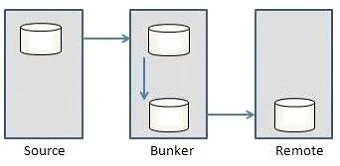
Refer to Exhibit. Which type of replication is represented in the exhibit?
The correct answer is A. Cascade/multihop, synchronous + disk buffered. Three-site Replication: Cascade/Multiphop (Synchronous + Disk Buffered) In the cascade/multihop three-site replication, data flows from the source to the intermediate storage array, known as a bunker, in the first hop, and then, from a bunker to a storage array at a remote site…
Question
Refer to Exhibit. Which type of replication is represented in the exhibit?
Exhibit
Options
- ACascade/multihop, synchronous + disk buffered
- BCascade/multihop, synchronous + asynchronous
- CTriangle/multitarget, synchronous + disk buffered
- DTriangle/multitarget, synchronous + differential resync
How the community answered
(39 responses)- A74% (29)
- B5% (2)
- C5% (2)
- D15% (6)
Explanation
Three-site Replication: Cascade/Multiphop (Synchronous + Disk Buffered) In the cascade/multihop three-site replication, data flows from the source to the intermediate storage array, known as a bunker, in the first hop, and then, from a bunker to a storage array at a remote site in the second hop. Replication can be performed in two ways, synchronous+ disk- buffered or synchronous + asynchronous. Synchronous + Disk Buffered: This method employs a combination of local and remote replication technologies. Synchronous replication occurs between the source and the bunker; a consistent PIT local replica is created at the bunker. Data is transmitted from the local replica at the bunker to the remote replica at the remote site. Optionally, a local replica can be created at the remote site after data is received from the bunker. In this method, a minimum of 4 storage volumes are required (including the source) to replicate one storage device. RPO at the remote site is usually in the order of hours for this implementation.
Topics
Community Discussion
No community discussion yet for this question.