
E10-001 · Question #37
Why does a restore operation need to communicate with the backup server?
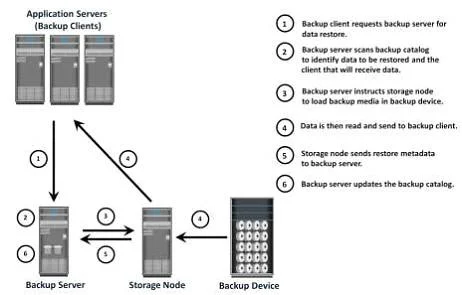
The correct answer is A. Locate the data to be restored using the backup catalog. Recovery Operation After the data is backed up, it can be restored when required. A restore process must be manually initiated from the client. Some backup software has a separate application for restore operations. These restore applications are usually accessible only to the…
Question
Why does a restore operation need to communicate with the backup server?
Exhibit
Options
- ALocate the data to be restored using the backup catalog
- BDetermine the RTO of the backup save set
- CRun the restore automatically according to a schedule
- DDetermine the RPO of the backup save set
How the community answered
(41 responses)- A80% (33)
- B5% (2)
- C10% (4)
- D5% (2)
Explanation
Recovery Operation After the data is backed up, it can be restored when required. A restore process must be manually initiated from the client. Some backup software has a separate application for restore operations. These restore applications are usually accessible only to the administrators or backup operators. Figure on the slide depicts a restore operation. Upon receiving a restore request, an administrator opens the restore application to view the list of clients that have been backed up. While selecting the client for which a restore request has been made, the administrator also needs to identify the client that will receive the restored data. Data can be restored on the same client for whom the restore request has been made or on any other client. The administrator then selects the data to be restored and the specified point in time to which the data has to be restored based on the RPO. Because all this information comes from the backup catalog, the restore application needs to communicate with the backup server. The backup server instructs the appropriate storage node to mount the specific backup media onto the backup device. Data is then read and sent to the client that has been identified to receive the restored data. Some restorations are successfully accomplished by recovering only the requested production data. For example, the recovery process of a spreadsheet is completed when the specific file is restored. In database restorations, additional data, such as log files, must be restored along with the production data. This ensures consistency for the restored data. In these cases, the RTO is extended due to the additional steps in the restore operation.
Topics
Community Discussion
No community discussion yet for this question.