E10-001 · Question #25
In Kerberos authentication, what is a role of the Active Directory?
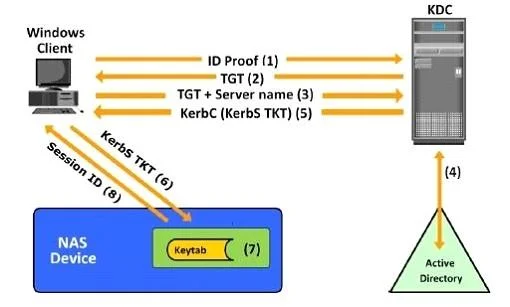
The correct answer is A. Verifies the user's login information. Kerberos Authentication 1. The Kerberos authentication process shown in figure on the slide includes the following steps: 2. The user logs on to the workstation in the Active Directory domain (or forest) using an ID and a The client computer sends a request to the AS running on…
Question
In Kerberos authentication, what is a role of the Active Directory?
Exhibit
Options
- AVerifies the user's login information
- BImplements the Authentication service and Ticket Granting service
- CVerifies the session ID when the client-server session is established
- DMaintains the access control list in a keytab file
How the community answered
(33 responses)- A73% (24)
- B15% (5)
- C9% (3)
- D3% (1)
Explanation
Kerberos Authentication 1. The Kerberos authentication process shown in figure on the slide includes the following steps: 2. The user logs on to the workstation in the Active Directory domain (or forest) using an ID and a The client computer sends a request to the AS running on the KDC for a Kerberos ticket. The KDC verifies the user's login information from Active Directory. 3. The KDC responds with an encrypted Ticket Granting Ticket (TGT) and an encrypted session key. TGT has a limited validity period. TGT can be decrypted only by the KDC, and the client can decrypt only the session key. 4. When the client requests a service from a server, it sends a request, consisting of the previously generated TGT, encrypted with the session key and the resource information to the 5. The KDC checks the permissions in Active Directory and ensures that the user is authorized to use that service. 6. The KDC returns a service ticket to the client. This service ticket contains fields addressed to the client and to the server hosting the service. 7. The client then sends the service ticket to the server that houses the required resources. 8. The server, in this case the NAS device, decrypts the server portion of the ticket and stores the information in a keytab file. As long as the client's Kerberos ticket is valid, this authorization process does not need to be repeated. The server automatically allows the client to access the appropriate resources. 9. A client-server session is now established. The server returns a session ID to the client, which tracks the client activity, such as file locking, as long as the session is active.
Topics
Community Discussion
No community discussion yet for this question.
