nerdexam
Dell-EMC

E10-001 · Question #135

A customer has a requirement to perform a backup each night. However, the customer has a limited amount of time for backups to run on week nights, Monday through Friday evenings. Which backup…

The correct answer is A. Incremental. Backup Granularity Backup granularity depends on business needs and the required RTO/RPO. Based on the granularity, backups can be categorized as full, incremental, and cumulative (or differential). Most organizations use a combination of these three backup types to meet their…

Backup, Archive, and Replication

Question

A customer has a requirement to perform a backup each night. However, the customer has a limited amount of time for backups to run on week nights, Monday through Friday evenings. Which backup granularity type is recommended to meet the backup window for those nights?

Exhibit
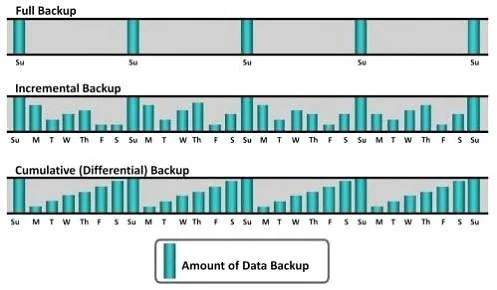
E10-001 question #135 exhibit

Options

  • AIncremental
  • BCumulative
  • CFull
  • DDifferential

How the community answered

(29 responses)
  • A
    72% (21)
  • B
    17% (5)
  • C
    3% (1)
  • D
    7% (2)

Explanation

Backup Granularity Backup granularity depends on business needs and the required RTO/RPO. Based on the granularity, backups can be categorized as full, incremental, and cumulative (or differential). Most organizations use a combination of these three backup types to meet their backup and recovery requirements. Figure on the slide depicts the different backup granularity levels. Full backup is a backup of the complete data on the production volumes. A full backup copy is created by copying the data in the production volumes to a backup storage device. It provides a faster recovery but requires more storage space and also takes more time to back up. Incremental backup copies the data that has changed since the last full or incremental backup, whichever has occurred more recently. This is much faster than a full backup (because the volume of data backed up is restricted to the changed data only) but takes longer to restore . Cumulative backup copies the data that has changed since the last full backup. This method takes longer than an incremental backup but is faster to restore. Another way to implement full backup is synthetic (or constructed) backup. This method is used when the production volume resources cannot be exclusively reserved for a backup process for extended periods to perform a full backup. It is usually created from the most recent full backup and all the incremental backups performed after that full backup. This backup is called synthetic because the backup is not created directly from production data. A synthetic full backup enables a full backup copy to be created offline without disrupting the I/O operation on the production volume. This also frees up network resources from the backup process, making them available for other production uses.

Topics

#incremental backup#backup window#backup scheduling#backup granularity

Community Discussion

No community discussion yet for this question.

Full E10-001 Practice