
DP-300 · Question #58
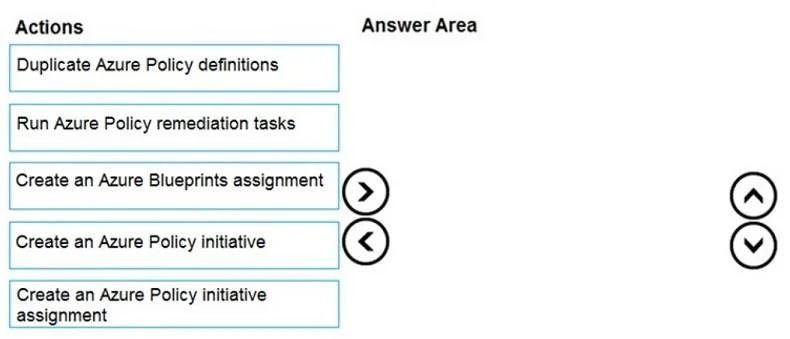
Drag and Drop Question You need to apply 20 built-in Azure Policy definitions to all new and existing Azure SQL Database deployments in an Azure subscription. The solution must minimize…
The correct answer is Create an Azure Policy Initiative; Create an Azure Policy Initiative assignment; Run Azure Policy remediation tasks. The correct sequence is to first create an Azure Policy Initiative (a collection of policies grouped together) to bundle all 20 built-in Azure Policy definitions into a single manageable unit, minimizing administrative effort compared to assigning 20 policies individually…
Question
Exhibit
Answer Area
Drag items
Correct arrangement
- Create an Azure Policy Initiative
- Create an Azure Policy Initiative assignment
- Run Azure Policy remediation tasks
Explanation
The correct sequence is to first create an Azure Policy Initiative (a collection of policies grouped together) to bundle all 20 built-in Azure Policy definitions into a single manageable unit, minimizing administrative effort compared to assigning 20 policies individually. Next, you create an Azure Policy Initiative assignment to apply the initiative to the subscription scope, targeting Azure SQL Database deployments. Finally, you run Azure Policy remediation tasks to bring existing non-compliant resources (existing SQL Databases) into compliance, since policy assignments only automatically enforce compliance on new resources going forward.
Topics
Community Discussion
No community discussion yet for this question.