nerdexam
Microsoft

DP-300 · Question #428

SIMULATION You need to implement a disaster recovery solution by using active geo-replication for an Azure Azure SQL database named db1. The replica must be in the East US Azure region on a server nam

The correct approach uses Azure Portal's built-in active geo-replication feature by navigating to the source database (db1), accessing the Replicas blade under Data Management, and creating a geo-secondary replica on the specified disaster recovery server (sql23456789-dr.database

Submitted by anjalisingh· Mar 6, 2026Implement a disaster recovery strategy for Azure SQL Database using active geo-replication to achieve business continuity and cross-region redundancy - aligns with the 'Implement High Availability and Disaster Recovery' domain in DP-300 (Administering Microsoft Azure SQL Solutions) certification.

Question

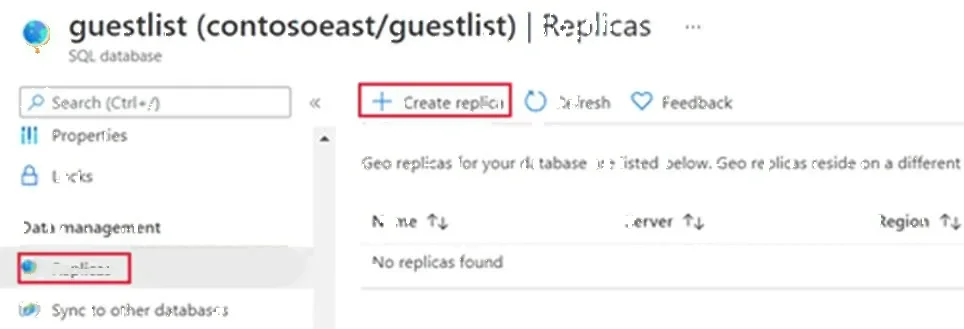
SIMULATION You need to implement a disaster recovery solution by using active geo-replication for an Azure Azure SQL database named db1. The replica must be in the East US Azure region on a server named sql23456789-dr.database.windows.net. You may need to use SQL Server Management Studio and the Azure portal. Answer: Step 1: Navigate to your database: In the Azure portal, browse to the Azure SQL Database you want to replicate. [Select db1] Step 2: On the SQL Database page, select your database, scroll to Data management, select Replicas, and then select Create replica. Step 3: Select your geo-secondary database Subscription and Resource group. Step 4: Select or create the server for the secondary database [Select named sql23456789- dr.database.windows.net] Question: The replica must be in the East US Azure region on a server named sql23456789- dr.database.windows.net. Step 5: When secondary database is created [or selected], the deployment process begins. Step 6: When the deployment is complete, the secondary database displays its status. (Step 7: Return to the primary database page, and then select Replicas. Your secondary database is listed under Geo replicas.) Reference: https://learn.microsoft.com/en-us/azure/azure-sql/database/active-geo-replication-configure-portal

Exhibit

DP-300 question #428 exhibit

Explanation

The correct approach uses Azure Portal's built-in active geo-replication feature by navigating to the source database (db1), accessing the Replicas blade under Data Management, and creating a geo-secondary replica on the specified disaster recovery server (sql23456789-dr.database.windows.net) in East US. This workflow is the Microsoft-recommended method for configuring active geo-replication, which maintains a continuously synchronized, readable secondary database in a different Azure region to ensure business continuity. The steps follow the exact Azure Portal UI flow required to establish cross-region replication without requiring T-SQL or PowerShell.

Topics

#Active Geo-Replication#Azure SQL Database#Disaster Recovery#High Availability

Community Discussion

No community discussion yet for this question.

Full DP-300 Practice