
DP-300 · Question #33
You have an Azure SQL database that contains a table named factSales. FactSales contains the columns shown in the following table. FactSales has 6 billion rows and is loaded nightly by using a batch…
The correct answer is D. columnstore archival compression. Columnstore tables and indexes are always stored with columnstore compression. You can further reduce the size of columnstore data by configuring an additional compression called archival compression. For columnstore tables and indexes, all columnstore tables and indexes always…
Question
Exhibits
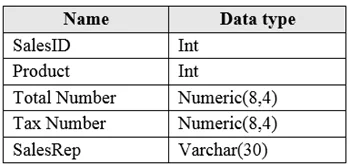
Options
- Apage compression
- Brow compression
- Ccolumnstore compression
- Dcolumnstore archival compression
How the community answered
(22 responses)- A9% (2)
- B5% (1)
- C14% (3)
- D73% (16)
Explanation
Columnstore tables and indexes are always stored with columnstore compression. You can further reduce the size of columnstore data by configuring an additional compression called archival compression. For columnstore tables and indexes, all columnstore tables and indexes always use columnstore compression and this is not user configurable. Use columnstore archival compression to further reduce the data size for situations when you can afford extra time and CPU resources to store and retrieve the data. You can configure columnstore archival compression. https://docs.microsoft.com/en-us/sql/relational-databases/data-compression/data-compression https://docs.microsoft.com/en-us/sql/relational-databases/data-compression/data- compression?view=sql-server-ver15
Community Discussion
No community discussion yet for this question.