
DA0-001 · Question #354
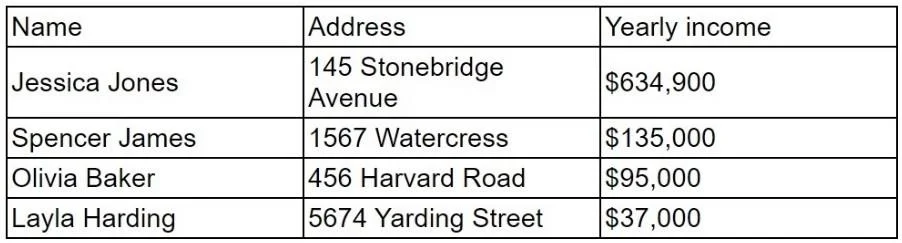
An analyst is reporting on the average income for a county and is reviewing the following data: Which of the following is the reason the analyst would need to cleanse the data in this data set?
The correct answer is B. Data outliers. When calculating the average income for a county, the analyst would need to cleanse the data due to the presence of data outliers, which can heavily skew the average and misrepresent the typical income.
Question
An analyst is reporting on the average income for a county and is reviewing the following data:
Which of the following is the reason the analyst would need to cleanse the data in this data set?
Exhibit
Options
- AData completeness
- BData outliers
- CDuplicate data
- DMissing values
How the community answered
(25 responses)- A8% (2)
- B88% (22)
- C4% (1)
Why each option
When calculating the average income for a county, the analyst would need to cleanse the data due to the presence of data outliers, which can heavily skew the average and misrepresent the typical income.
Data completeness refers to whether all necessary data is present, but it's not the primary reason to cleanse if the issue is skewed averages from existing data.
Data outliers are extreme values that lie an abnormal distance from other values in a random sample from a population. When calculating averages like income, outliers (e.g., very high or very low incomes) can disproportionately influence the mean, making it a less accurate representation of the central tendency. Cleansing outliers ensures the average is more representative.
Duplicate data would lead to inflated counts or totals, but not necessarily skew the average in the specific way outliers do if each record is unique but has an extreme value.
Missing values would prevent calculations for certain records or affect the total count, but the core problem of an average being skewed often points to existing extreme values rather than just missing ones.
Concept tested: Data cleansing - Outlier detection
Topics
Community Discussion
No community discussion yet for this question.