
CY0-001 · Question #32
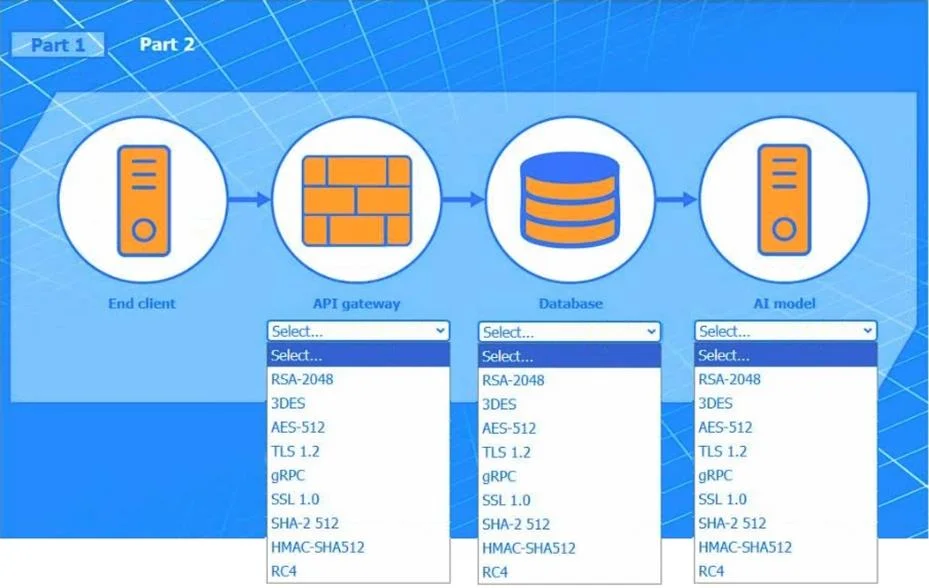
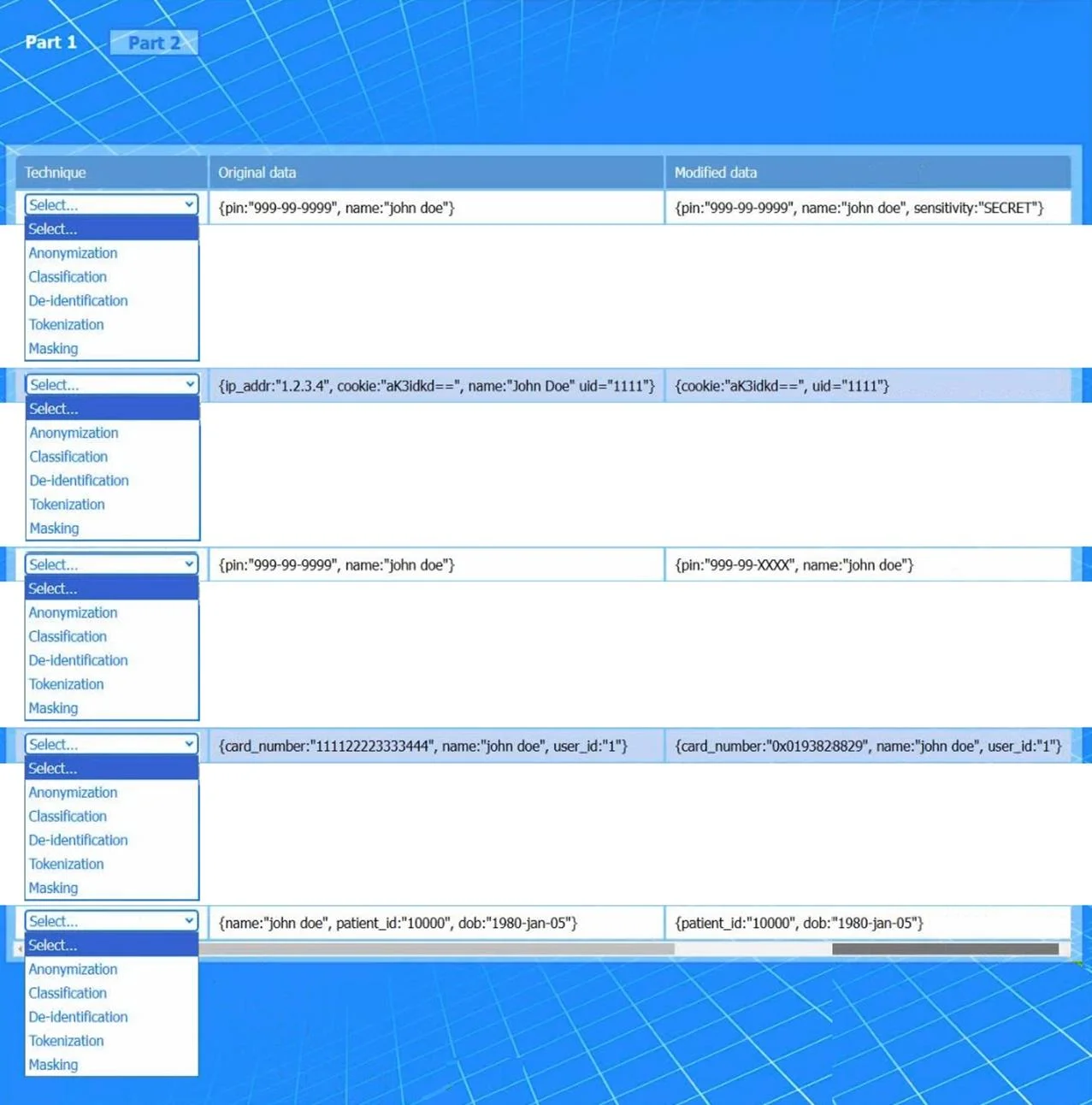
SIMULATION Instructions Part1 Use drop-down menu to select the most appropriate protocol or cipher for each system component. Part2 Use the drop-down menu to select the most appropriate technique to…
The correct answer is C. AES-512. AES (Advanced Encryption Standard) is the industry-standard symmetric cipher for protecting data at rest and in transit - making it the right choice when the goal is implementing data encryption after a pentest finding. Note that while AES-512 isn't a real standard (AES tops…
Question
Exhibits
Options
- ARSA-2048
- B3DES
- CAES-512
- DTLS 1.2
- EgRPC
- FSSL 1.0
- GSHA-512
- HHMAC-SHA512
- IRC4
How the community answered
(35 responses)- C83% (29)
- D6% (2)
- E3% (1)
- I9% (3)
Explanation
AES (Advanced Encryption Standard) is the industry-standard symmetric cipher for protecting data at rest and in transit - making it the right choice when the goal is implementing data encryption after a pentest finding. Note that while AES-512 isn't a real standard (AES tops out at 256-bit keys in practice), the exam is testing whether you recognize AES as the correct category of tool over the other listed options.
Why the distractors fail:
- RSA-2048 is asymmetric encryption used for key exchange, not bulk data encryption
- 3DES is a deprecated legacy cipher, replaced precisely because it is insufficiently secure
- TLS 1.2 is a transport protocol, not a standalone encryption cipher
- gRPC is a remote procedure call framework, not an encryption mechanism at all
- SSL 1.0 is a critically broken, long-retired protocol - the opposite of a fix for insufficient encryption
- SHA-512 is a hashing algorithm (one-way), not encryption
- HMAC-SHA512 provides message integrity/authentication, not confidentiality/encryption
- RC4 is a weak, broken stream cipher deprecated by NIST and RFC 7465
Memory tip: When a question asks about encrypting data, filter out everything that isn't a symmetric block cipher - protocols (TLS, SSL, gRPC), hashes (SHA), and MACs (HMAC) all serve different purposes. That leaves only AES and the legacy/broken options (3DES, RC4), and AES always wins.
Topics
Community Discussion
No community discussion yet for this question.