
CAS-003 · Question #861
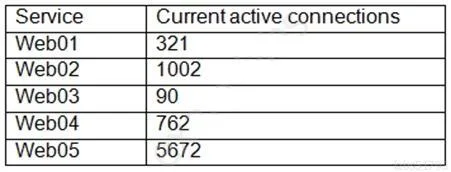
After multiple availability issues, a systems administrator is reviewing the following metrics from the web server farm, which is configured to serve the company's e-commerce site: To reduce the…
The correct answer is B. load balancer algorithm. When a web server farm experiences availability issues, the likely culprit is uneven or inefficient traffic distribution across the servers. The load balancer algorithm determines how requests are distributed - for example, round-robin distributes evenly by count but ignores…
Question
After multiple availability issues, a systems administrator is reviewing the following metrics from the web server farm, which is configured to serve the company’s e-commerce site:
To reduce the availability risk, the company should implement a new:
Exhibit
Options
- Alog correlation and aggregation system
- Bload balancer algorithm
- Cweb application firewall
- Dweb server to the farm
How the community answered
(62 responses)- A3% (2)
- B76% (47)
- C15% (9)
- D6% (4)
Explanation
When a web server farm experiences availability issues, the likely culprit is uneven or inefficient traffic distribution across the servers. The load balancer algorithm determines how requests are distributed - for example, round-robin distributes evenly by count but ignores server load, while 'least connections' or 'weighted' algorithms route traffic based on current capacity. Changing to a more appropriate algorithm ensures no single server is overwhelmed while others sit idle, directly addressing availability risk. Adding a log aggregator (A) aids visibility but doesn't fix distribution; a WAF (C) is a security control, not a capacity control; and adding a server (D) may help scale but doesn't fix a poor distribution algorithm.
Topics
Community Discussion
No community discussion yet for this question.