
CAS-003 · Question #220
A hospital uses a legacy electronic medical record system that requires multicast for traffic between the application servers and databases on virtual hosts that support segments of the application…
The correct answer is B. VLAN201, VLAN202, VLAN700. To restore the EMR system while minimizing the multicast footprint as required by the ISM, multicast should only be enabled on the VLANs that host the application servers, databases, and the virtual infrastructure connecting them. VLAN201, VLAN202, and VLAN700 represent the…
Question
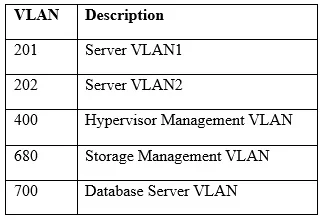
A hospital uses a legacy electronic medical record system that requires multicast for traffic between the application servers and databases on virtual hosts that support segments of the application. Following a switch upgrade, the electronic medical record is unavailable despite physical connectivity between the hypervisor and the storage being in place. The network team must enable multicast traffic to restore access to the electronic medical record. The ISM states that the network team must reduce the footprint of multicast traffic on the network. Using the above information, on which VLANs should multicast be enabled?
Exhibit
Options
- AVLAN201, VLAN202, VLAN400
- BVLAN201, VLAN202, VLAN700
- CVLAN201, VLAN202, VLAN400, VLAN680, VLAN700
- DVLAN400, VLAN680, VLAN700
How the community answered
(58 responses)- A5% (3)
- B66% (38)
- C21% (12)
- D9% (5)
Why each option
To restore the EMR system while minimizing the multicast footprint as required by the ISM, multicast should only be enabled on the VLANs that host the application servers, databases, and the virtual infrastructure connecting them. VLAN201, VLAN202, and VLAN700 represent the minimal set required without enabling extraneous segments.
Including VLAN400 is unnecessary for EMR functionality and violates the ISM requirement to minimize the multicast traffic footprint.
VLAN201 and VLAN202 support the application servers and databases that the legacy EMR requires for multicast-based communication, while VLAN700 supports the virtual host infrastructure that interconnects them. Limiting multicast to these three VLANs satisfies the EMR's operational requirements while honoring the ISM directive to reduce the multicast footprint by excluding non-essential VLANs such as VLAN400 and VLAN680.
Enabling multicast across all five VLANs unnecessarily extends multicast traffic to segments that do not require it, directly contradicting the ISM's footprint reduction requirement.
VLAN400, VLAN680, and VLAN700 alone omit VLAN201 and VLAN202, which host the core EMR application and database servers that require multicast to communicate.
Concept tested: Multicast VLAN scoping to minimize network traffic footprint
Source: https://www.cisco.com/c/en/us/td/docs/ios-xml/ios/ipmulti_pim/configuration/xe-16/imc-pim-xe-16-book/imc-ip-multicast-overview.html
Topics
Community Discussion
No community discussion yet for this question.