
AZ-900 · Question #130
Drag and Drop Question Match the Azure Cloud Services benefit to the correct description. Instructions: To answer, drag the appropriate benefit from the column on the left to its description on the…
The correct answer is Fault tolerance; Disaster recovery; Dynamic scalability; Low latency. The correct arrangement maps each description to its precise Azure benefit: Fault tolerance refers to a system's ability to continue operating despite component failures (built-in redundancy); Disaster recovery refers to the policies and procedures to restore systems after a…
Question
Exhibit
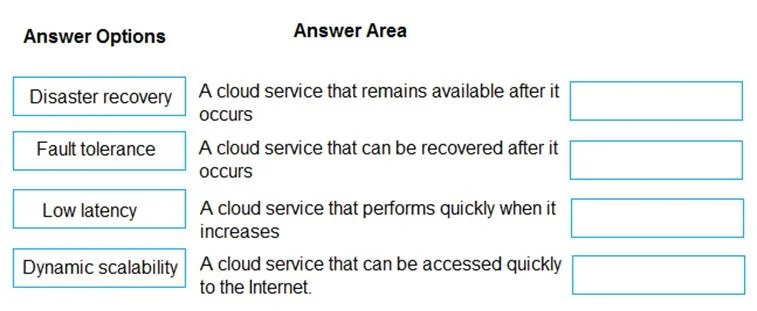
Answer Area
Drag items
Correct arrangement
- Fault tolerance
- Disaster recovery
- Dynamic scalability
- Low latency
Explanation
The correct arrangement maps each description to its precise Azure benefit: Fault tolerance refers to a system's ability to continue operating despite component failures (built-in redundancy); Disaster recovery refers to the policies and procedures to restore systems after a catastrophic event; Dynamic scalability refers to the ability to automatically scale resources up or down based on demand; and Low latency refers to minimizing the delay in data transmission, often achieved through geographically distributed data centers. Each term has a distinct meaning in cloud architecture, and matching them correctly requires understanding their specific definitions rather than treating them as interchangeable.
Topics
Community Discussion
No community discussion yet for this question.