
AZ-500 · Question #84
You have an Azure subscription that contains the virtual networks shown in the following table. The subscription contains the virtual machines shown in the following table. On NIC1, you configure an…
The correct answer is C. NIC2 and NIC3 only. Explanation Option C is correct because Application Security Groups (ASGs) can only be applied to NICs that reside within the same virtual network. Since NIC1 is in a specific VNet, only NICs belonging to VMs in that same VNet can share ASG1 - meaning NIC2 and NIC3 qualify…
Question
Exhibits
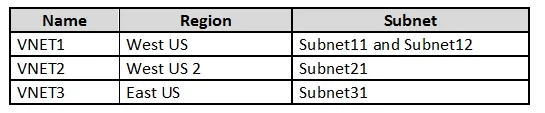
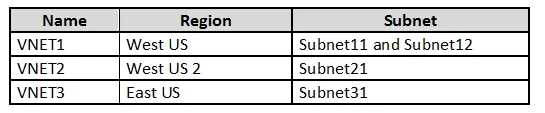
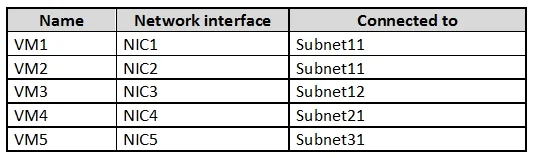
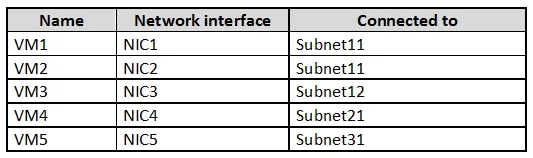
Options
- ANIC2 only
- BNIC2, NIC3, NIC4, and NIC5
- CNIC2 and NIC3 only
- DNIC2, NIC3, and NIC4 only
How the community answered
(39 responses)- A5% (2)
- B3% (1)
- C79% (31)
- D13% (5)
Explanation
Explanation
Option C is correct because Application Security Groups (ASGs) can only be applied to NICs that reside within the same virtual network. Since NIC1 is in a specific VNet, only NICs belonging to VMs in that same VNet can share ASG1 - meaning NIC2 and NIC3 qualify, while NICs in other VNets do not.
- Option A (NIC2 only) is wrong because there are multiple NICs in the same VNet as NIC1, not just one.
- Option B (NIC2–NIC5) is wrong because it incorrectly includes NICs from different virtual networks, which is not permitted.
- Option D (NIC2, NIC3, NIC4) is wrong because NIC4 belongs to a different VNet, making it ineligible for ASG1.
Memory Tip: Think of ASGs as "VNet-bound clubs" - a NIC can only join an ASG club if it lives in the same VNet as the NIC where the ASG was first configured. Cross-VNet ASG sharing is not allowed, even within the same subscription.
Topics
Community Discussion
No community discussion yet for this question.