
AZ-500 · Question #604
Hotspot Question Your on-premises network contains an Active Directory Domain Services (AD DS) domain and the devices shown in the following table. You have a hybrid Microsoft Entra tenant that…
The correct answer is SMB 2.1 = No; SMB 3.0 = No; SMB 3.1.1 = Yes. This question tests understanding of Azure Files SMB authentication with hybrid identities, specifically how RBAC roles, share-level permissions, and directory/file-level NTFS permissions interact when accessed from domain-joined vs. non-domain-joined devices.
Question
Exhibits
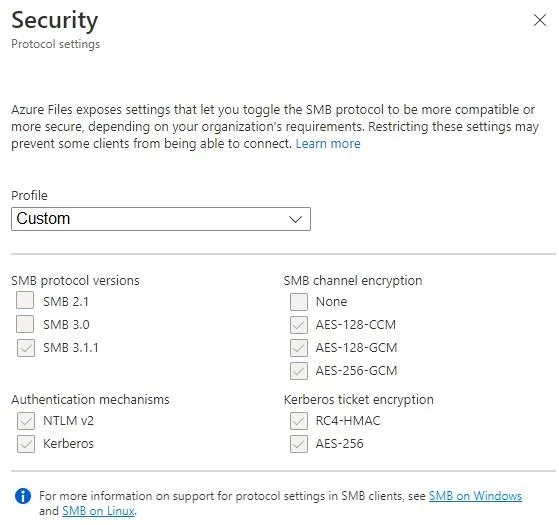
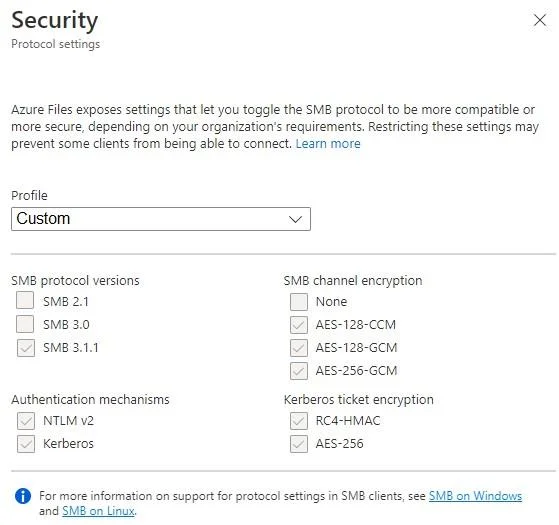
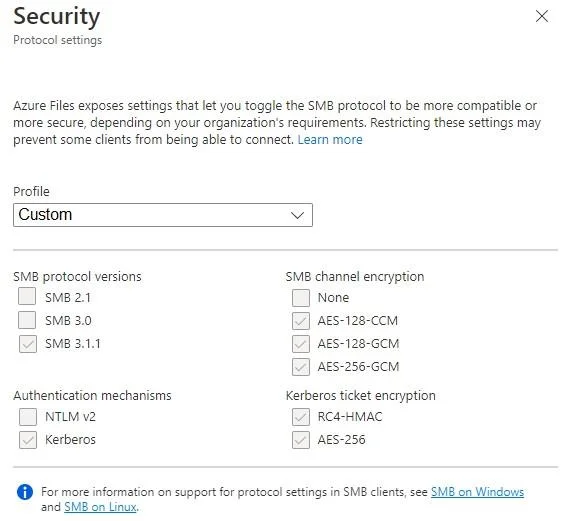
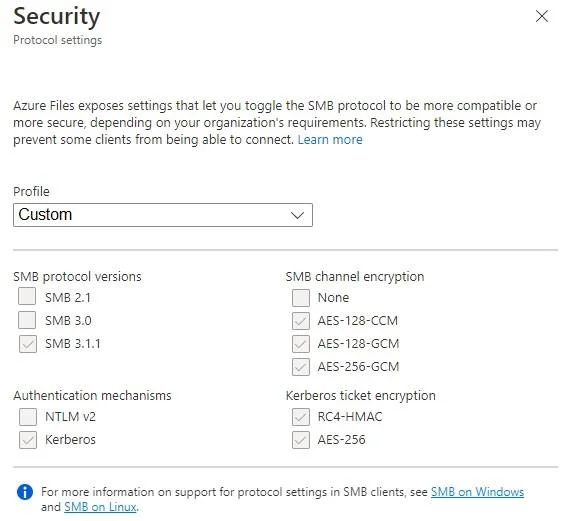
Answer Area
- SMB 2.1No
- SMB 3.0No
- SMB 3.1.1Yes
Explanation
This question tests understanding of Azure Files SMB authentication with hybrid identities, specifically how RBAC roles, share-level permissions, and directory/file-level NTFS permissions interact when accessed from domain-joined vs. non-domain-joined devices.
Approach. For Azure Files hybrid access: (1) The device must be domain-joined (either on-premises AD DS or Microsoft Entra joined) to authenticate via Kerberos tickets for SMB access using identity-based authentication. (2) The user needs both the RBAC role (Storage File Data SMB Share Contributor is assigned here) AND sufficient NTFS/share-level permissions on the share. (3) If a device is NOT domain-joined to the same AD DS or Entra tenant, it cannot obtain a Kerberos ticket and identity-based SMB auth will fail - the user would need to use storage account key authentication instead. (4) Share-level RBAC (Storage File Data SMB Share Contributor) grants read/write/delete at the share level, but NTFS permissions at the directory/file level can further restrict or allow access. When evaluating each statement: a device that is AD DS domain-joined can authenticate User1 via on-premises AD Kerberos for Azure Files (if AD DS authentication is enabled on the storage account); a non-domain-joined device cannot use identity-based auth and would be blocked if key-based auth is not used; the combination of RBAC role + NTFS permissions determines effective access.
Concept tested. Azure Files identity-based SMB authentication using hybrid AD DS integration, the interplay between RBAC share-level permissions (Storage File Data SMB Share Contributor) and NTFS directory/file-level permissions, and the requirement for devices to be domain-joined to use Kerberos-based authentication for Azure Files shares.
Topics
Community Discussion
No community discussion yet for this question.