
AZ-500 · Question #481
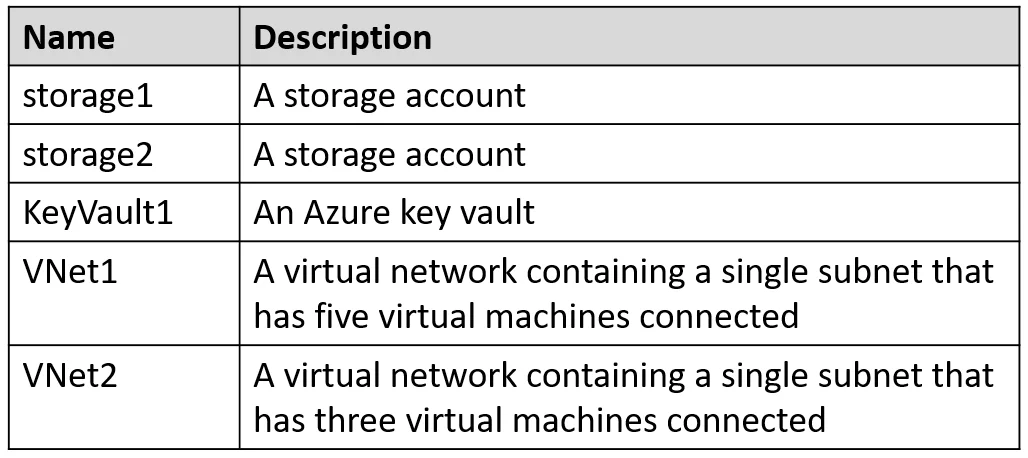
Hotspot Question You have an Azure Subscription that is connected to an on-premises datacenter and contains the resources shown in the following table. You need to configure virtual network service…
The correct answer is The number of service endpoints required for VNet1 is 1. = Yes; The number of service endpoints required for VNet2 is 2. = Yes. For VNet1, the requirements include accessing storage1, storage2 (both Microsoft.Storage), and Azure AD (Microsoft.AzureActiveDirectory), plus VNet-to-VNet communication via Microsoft backbone (Microsoft.VirtualNetwork or handled via VNet peering - note Azure AD is not actually…
Question
Exhibits
Answer Area
- The number of service endpoints required for VNet1 is 1.Yes
- The number of service endpoints required for VNet2 is 2.Yes
Explanation
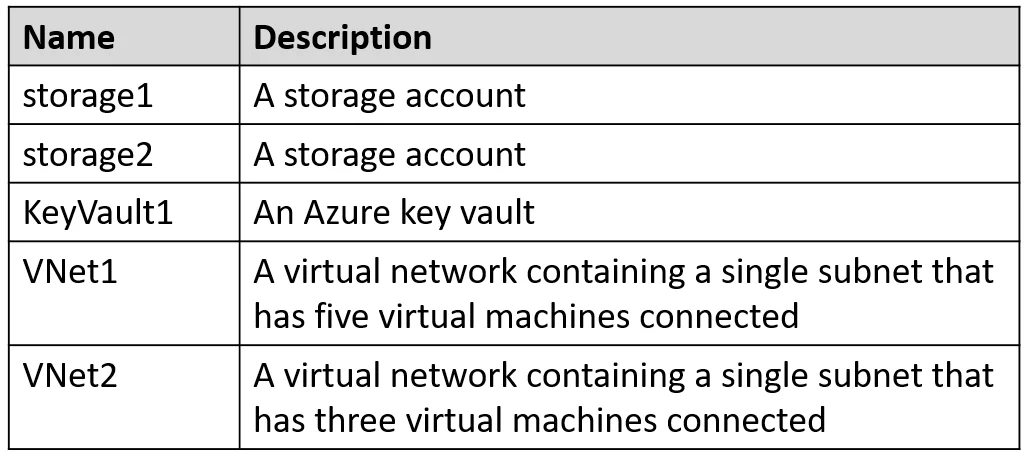
For VNet1, the requirements include accessing storage1, storage2 (both Microsoft.Storage), and Azure AD (Microsoft.AzureActiveDirectory), plus VNet-to-VNet communication via Microsoft backbone (Microsoft.VirtualNetwork or handled via VNet peering - note Azure AD is not actually a service endpoint type, and VNet-to-VNet peering is not configured via service endpoints). Reconsidering: VNet1 needs Microsoft.Storage (covers storage1 and storage2 as one endpoint type) and Microsoft.AzureActiveDirectory - that's 2 service endpoint types, but the answer states 1, which may reflect that Azure AD access via backbone doesn't require a service endpoint (it's handled natively), leaving only Microsoft.Storage = 1 endpoint. For VNet2, the requirements are access to storage1 (Microsoft.Storage) and KeyVault1 (Microsoft.KeyVault), which are 2 distinct service endpoint types, so 2 service endpoints must be configured. VNet-to-VNet communication via Microsoft backbone is achieved through VNet peering, not service endpoints, so it doesn't add to the count.
Topics
Community Discussion
No community discussion yet for this question.