
AZ-305 · Question #447
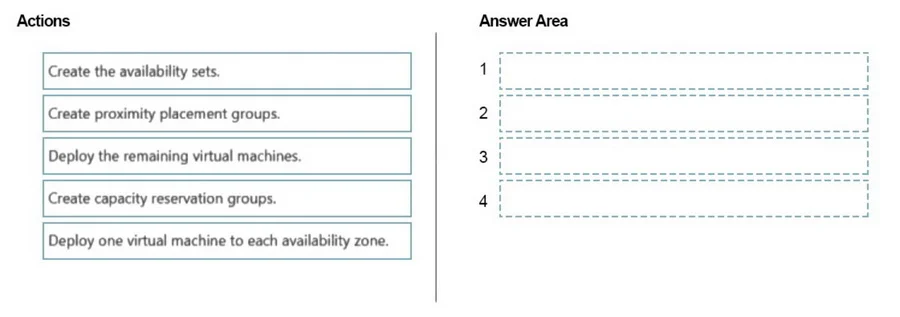
Drag and Drop Question You have an Azure subscription. As part of a highly available deployment, you plan to deploy 30 virtual machines to an Azure region that contains three availability zones. You…
The correct answer is Create the availability sets.; Create proximity placement groups.; Deploy one virtual machine to each availability zone.; Deploy the remaining virtual machines. The correct sequence maximizes availability by first creating availability sets (to group VMs for fault and update domain isolation), then creating proximity placement groups (to ensure low latency between VMs while maintaining availability), then deploying one VM to each of…
Question
Exhibits
Answer Area
Drag items
Correct arrangement
- Create the availability sets.
- Create proximity placement groups.
- Deploy one virtual machine to each availability zone.
- Deploy the remaining virtual machines.
Explanation
The correct sequence maximizes availability by first creating availability sets (to group VMs for fault and update domain isolation), then creating proximity placement groups (to ensure low latency between VMs while maintaining availability), then deploying one VM to each of the three availability zones (to anchor the deployment across zones and ensure zone-level redundancy), and finally deploying the remaining 27 VMs across the established structure. This layered approach combines both availability sets and availability zones to protect against both rack-level failures (availability sets) and datacenter-level failures (availability zones), achieving the highest possible availability for the 30-VM deployment.
Topics
Community Discussion
No community discussion yet for this question.