nerdexam
Microsoft

AZ-204 · Question #540

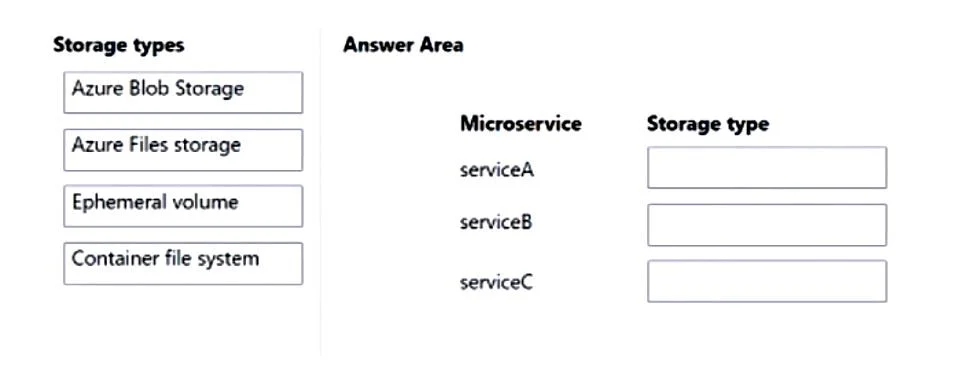
Drag and Drop Question You are developing several microservices named serviceA, serviceB, and serviceC. You deploy the microservices to a new Azure Container Apps environment. You have the following r

Container file system is correct for serviceA because it provides ephemeral storage scoped only to the individual container with storage limited to available disk space, matching the requirement for container-only visibility with disk space restrictions. Ephemeral volume is corre

Submitted by carlos_mx· Mar 30, 2026Implement Azure Container Apps storage solutions and understand the differences between container file system, ephemeral volumes, Azure Files, and Azure Blob Storage in the context of microservice persistence requirements.

Question

Drag and Drop Question You are developing several microservices named serviceA, serviceB, and serviceC. You deploy the microservices to a new Azure Container Apps environment. You have the following requirements: - The microservices must persist data to storage. - serviceA must persist data only visible to the current container and the storage must be restricted to the amount of disk space available in the container. - serviceB must persist data for the lifetime of the replica and allow multiple containers in the replica to mount the same storage location. - serviceC must persist data beyond the lifetime of the replica while allowing multiple containers to access the storage and enable per object permissions. You need to configure storage for each microservice. Which storage type should you use? To answer, drag the appropriate storage types to the correct microservices. Each storage type may be used once, more than once, or not at all. You may need to drag the split bar between panes or scroll to view content. NOTE: Each correct selection is worth one point. Answer:

Exhibit

AZ-204 question #540 exhibit

Explanation

Container file system is correct for serviceA because it provides ephemeral storage scoped only to the individual container with storage limited to available disk space, matching the requirement for container-only visibility with disk space restrictions. Ephemeral volume is correct for serviceB because it persists for the lifetime of the replica and supports multiple containers within the same replica sharing the same storage mount point. Azure Blob Storage is correct for serviceC because it persists data beyond the replica lifetime, supports multiple containers accessing the same storage, and natively provides per-object permissions through Azure RBAC and shared access signatures (SAS).

Topics

#Azure Container Apps#Storage Configuration#Microservices#Ephemeral vs Persistent Storage

Community Discussion

No community discussion yet for this question.

Full AZ-204 Practice