
AZ-104 · Question #807
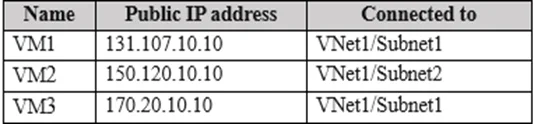
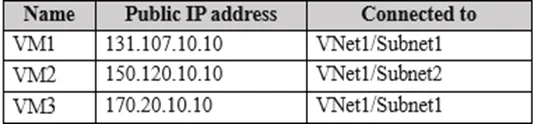
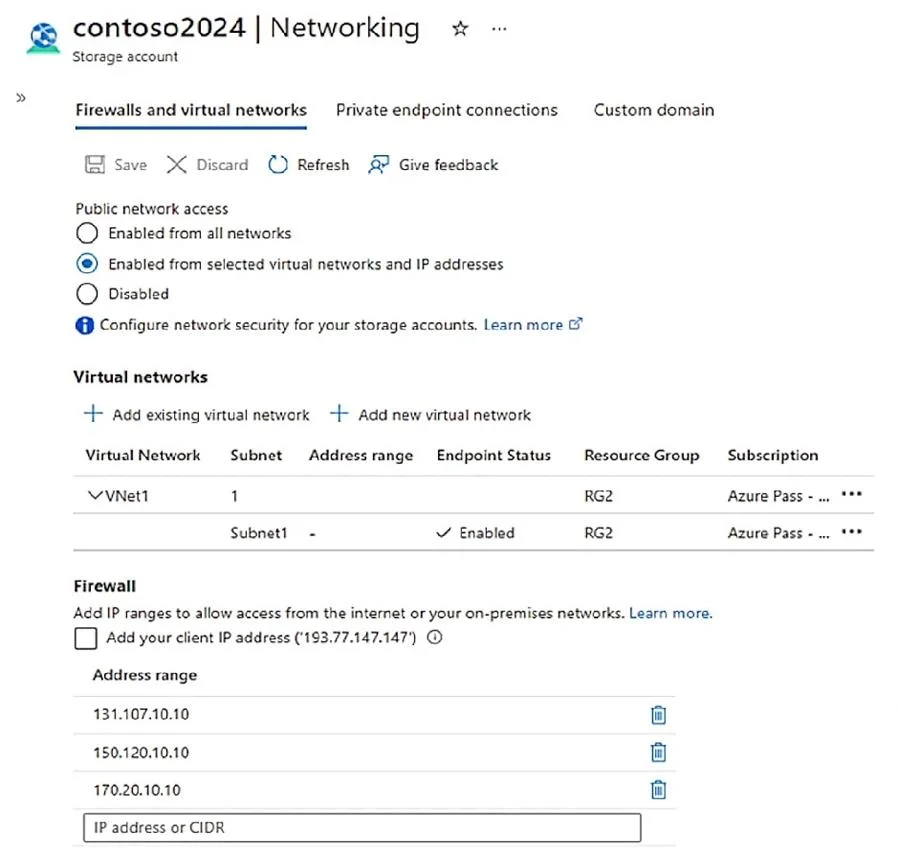
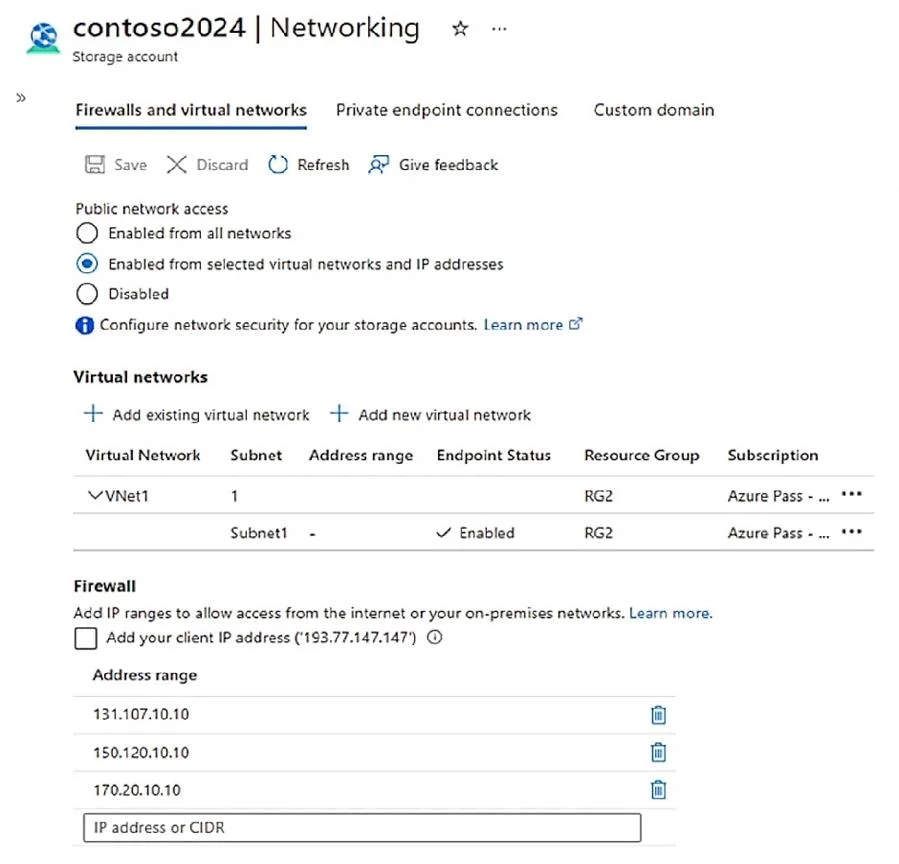
Hotspot Question You have an Azure subscription that contains the virtual machines shown in the following table. The subscription contains a storage account named contoso2024 as shown in the…
The correct answer is VM1 can connect to contoso2024 by using 131.107.10.10. = Yes; VM2 can connect to contoso2024 by using 150.120.10.10. = No; VM3 must use its private IP address to connect to contoso2024. = No. VM1 is in the same VNet (or peered VNet) that has an approved private endpoint or service endpoint connection to contoso2024, and 131.107.10.10 is VM1's public IP address which is allowed through the storage account's firewall rules - so VM1 can connect using that public IP…
Question
Exhibits
Answer Area
- VM1 can connect to contoso2024 by using 131.107.10.10.Yes
- VM2 can connect to contoso2024 by using 150.120.10.10.No
- VM3 must use its private IP address to connect to contoso2024.No
Explanation
VM1 is in the same VNet (or peered VNet) that has an approved private endpoint or service endpoint connection to contoso2024, and 131.107.10.10 is VM1's public IP address which is allowed through the storage account's firewall rules - so VM1 can connect using that public IP. VM2's IP (150.120.10.10) is not listed in the storage account's allowed IP ranges/firewall rules, so it cannot connect using that address. VM3 is in a VNet that has a service endpoint or private endpoint configured for the storage account, meaning traffic is routed over the Microsoft backbone using private IP addresses; however, the statement says VM3 'must' use its private IP - in reality VM3 may also be able to connect via its public IP if firewall rules permit, OR the VNet/subnet is configured with a service endpoint that allows the VNet traffic without restricting to private IP only, making the 'must' statement false.
Topics
Community Discussion
No community discussion yet for this question.