
AZ-104 · Question #111
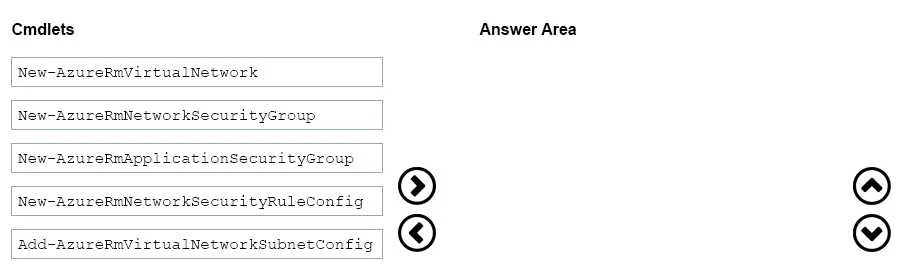
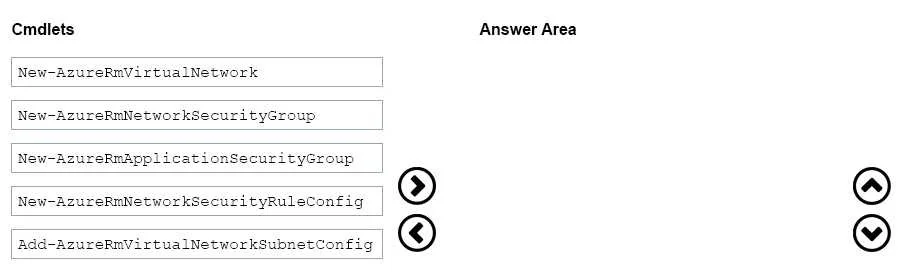
Drag and Drop Question You have an Azure subscription. The subscription includes a virtual network named VNet1. Currently, VNet1 does not contain any subnets. You plan to create subnets on VNet1 and…
The correct answer is New-AzureRmApplicationSecurityGroup; New-AzureRmNetworkSecurityRuleConfig; New-AzureRmNetworkSecurityGroup; Add-AzureRmVirtualNetworkSubnetConfig. The correct sequence follows the logical dependency chain: first create the Application Security Groups (ASGs) that will be referenced in rules, then create a Network Security Rule Config that references those ASGs to define traffic restrictions, then bundle that rule into a…
Question
Exhibits
Answer Area
Drag items
Correct arrangement
- New-AzureRmApplicationSecurityGroup
- New-AzureRmNetworkSecurityRuleConfig
- New-AzureRmNetworkSecurityGroup
- Add-AzureRmVirtualNetworkSubnetConfig
Explanation
The correct sequence follows the logical dependency chain: first create the Application Security Groups (ASGs) that will be referenced in rules, then create a Network Security Rule Config that references those ASGs to define traffic restrictions, then bundle that rule into a Network Security Group (NSG), and finally attach the NSG to a subnet via Add-AzureRmVirtualNetworkSubnetConfig. This order ensures each resource exists before it is referenced by the next cmdlet. The NSG with its rules is what gets associated to subnets to enforce the ASG-based traffic restrictions.
Topics
Community Discussion
No community discussion yet for this question.