
70-649 · Question #233
Your company has an Active Directory domain. A server named Server2 runs Windows Server 2008 R2. All client computers run Windows 7. You install the Remote Desktop Services server role, RD Web…
The correct answer is A. Enable the Request clients to send a statement of health option in the Remote Desktop client access policy. C. Configure Network Access Protection (NAP) on a server in the domain. Health requirement policies on the NAP health policy server determine whether a NAP-capable client iscompliant or noncompliant, how to treat noncompliant NAP clients and whether they should automaticallyremediate their health state, and how to treat non-NAP-capable clients for…
Question
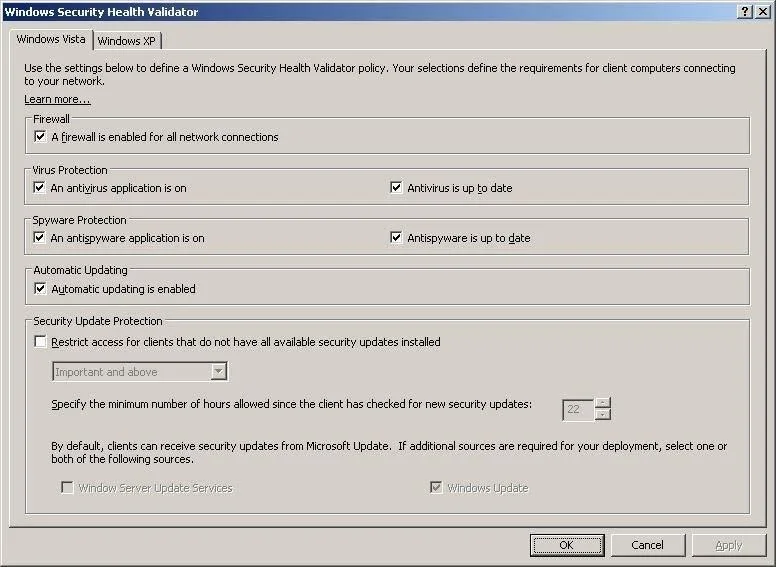
Your company has an Active Directory domain. A server named Server2 runs Windows Server 2008 R2. All client computers run Windows 7. You install the Remote Desktop Services server role, RD Web Access role service, and RD Gateway role service on Server2. You need to ensure that all client computers have compliant firewall, antivirus software, and antispyware. Which two actions should you perform? (Each correct answer presents part of the solution. Choose two.)
Exhibit
Options
- AEnable the Request clients to send a statement of health option in the Remote Desktop client access policy.
- BAdd the Remote Desktop Services servers to the Windows Authorization Access domain local security group.
- CConfigure Network Access Protection (NAP) on a server in the domain.
- DAdd the Remote Desktop Services client computers to the Windows Authorization Access domain local
How the community answered
(58 responses)- A79% (46)
- B9% (5)
- D12% (7)
Explanation
Health requirement policies on the NAP health policy server determine whether a NAP-capable client iscompliant or noncompliant, how to treat noncompliant NAP clients and whether they should automaticallyremediate their health state, and how to treat non-NAP-capable clients for different NAP enforcement methods. A health requirement policy is a combination of a connection request policy, a health policy, Network AccessProtection settings, and a network policy. 21c5ccdcf490&displaylang=en
Topics
Community Discussion
No community discussion yet for this question.