
70-459 · Question #46
You need to recommend a change to sp3 to ensure that the procedure continues to execute even if one of the UPDATE statements fails. Which change should you recommend?
The correct answer is B. Set the XACT_ABORT option to off. Case Study 2 - Contoso Ltd (QUESTION 47 ~ QUESTION 51) Application Overview Contoso, Ltd., is the developer of an enterprise resource planning (ERP) application. Contoso is designing a new version of the ERP application. The previous version of the ERP application used SQL…
Question
Exhibits
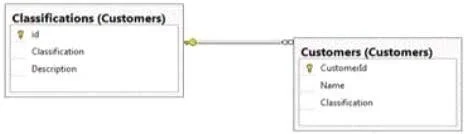
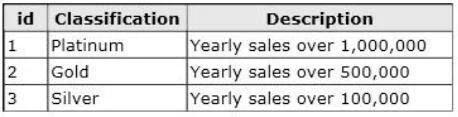
Options
- ASet the IMPLICIT_TRANSACTIONS option to on.
- BSet the XACT_ABORT option to off.
- CSet the IMPLICIT_TRANSACTIONS option to off.
- DSet the XACT_ABORT option to on.
How the community answered
(28 responses)- A4% (1)
- B86% (24)
- C7% (2)
- D4% (1)
Explanation
Case Study 2 - Contoso Ltd (QUESTION 47 ~ QUESTION 51) Application Overview Contoso, Ltd., is the developer of an enterprise resource planning (ERP) application. Contoso is designing a new version of the ERP application. The previous version of the ERP application used SQL Server 2008 R2. The new version will use SQL Server 2012. The ERP application relies on an import process to load supplier data. The import process updates thousands of rows simultaneously, requires exclusive access to the database, and runs daily. You receive several support calls reporting unexpected behavior in the ERP application. After analyzing the calls, you conclude that users made changes directly to the tables in the The current database schema contains a table named OrderDetails. The OrderDetails table contains information about the items sold for each purchase order. OrderDetails stores the product ID, quantities, and discounts applied to each product in a purchase order. The product price is stored in a table named Products. The Products table was defined by using the SQL_Latinl_General_CP1_CI_AS collation. A column named ProductName was created by using the varchar data type. The database contains a table named Orders. Orders contains alt of the purchase orders from the last 12 months. Purchase orders that are older than 12 months are stored in a table named OrdersOld. The previous version of the ERP application relied on table-level security. Stored Procedures The current version of the database contains stored procedures that change two tables. The following shows the relevant portions of the two stored procedures: Customer Problems Installation Issues The current version of the ERP application requires that several SQL Server logins be set up to function correctly. Most customers set up the ERP application in multiple locations and must create logins multiple times. Index Fragmentation Issues Customers discover that clustered indexes often are fragmented. To resolve this issue, the customers defragment the indexes more frequently. All of the tables affected by fragmentation have the following columns that are used as the clustered index key: Customers who have large amounts of historical purchase order data report that backup time is Users report that when they search product names, the search results exclude product names that contain accents, unless the search string includes the accent. Missing Data Issues Customers report that when they make a price change in the Products table, they cannot retrieve the price that the item was sold for in previous orders. Query Performance Issues Customers report that query performance degrades very quickly. Additionally, the customers report that users cannot run queries when SQL Server runs maintenance tasks. During the monthly import process, database administrators receive many supports call from users who report that they cannot access the supplier data. The database administrators want to reduce the amount of time required to import the data. Design Requirements File Storage Requirements The ERP database stores scanned documents that are larger than 2 MB. These files must only be accessed through the ERP application. File access must have the best possible read and write Data Recovery Requirements If the import process fails, the database must be returned to its prior state immediately. Security Requirements You must provide users with the ability to execute functions within the ERP application, without having direct access to the underlying tables. Concurrency Requirements You must reduce the likelihood of deadlocks occurring when Sales.Proc1 and Sales.Proc2
Topics
Community Discussion
No community discussion yet for this question.