
70-243 · Question #1
You recently migrated from System Center 2012 Configuration Managerto System Center 2012 Configuration Manager. Your network contains a client computer that runs the 64-bit version of Windows 7 and…
The correct answer is B. Create a new Application that has three different deployment types and configure global conditions for. Applications contain multiple deployment types that contain the files and commands necessary to install the software. For example, deployment types for a local installation, a virtual application package or a version of the application for mobile devices. MSI 64, 32 deployment…
Question
You recently migrated from System Center 2012 Configuration Managerto System Center 2012 Configuration Manager. Your network contains a client computer that runs the 64-bit version of Windows 7 and the 32-brt version of Widows 7. Some client computers have the Microsoft Application Virtualization (App-V) client installed. You have an Application named App1. You have a 64-bit version of App1, a 32-bit version of App1, and a virtual version of App1. You need to deploy the Application to all of the client computers. The solution must minimize the amount of administrative effort. What should you do?
Exhibit
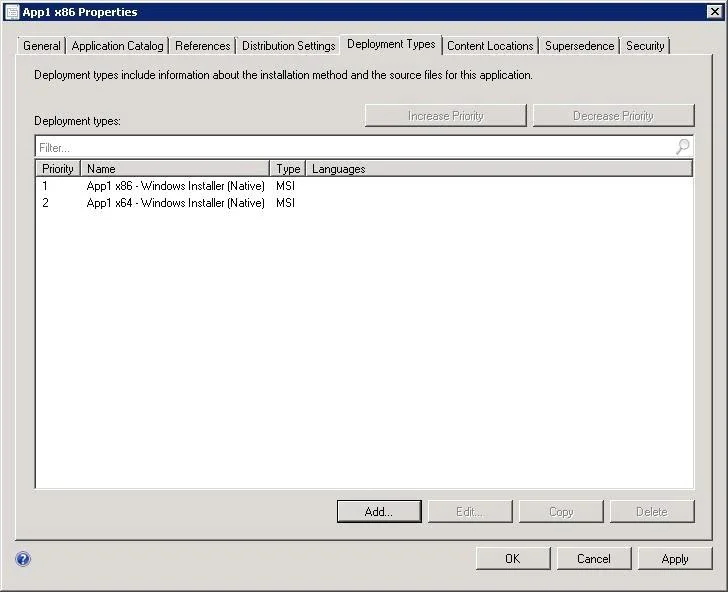
Options
- ACreate a new Application that has three different deployment types and create a target collection for
- BCreate a new Application that has three different deployment types and configure global conditions for
- CCreate a new package for each version of App1.
- DCreate a new Application for each version of App1.
How the community answered
(27 responses)- A4% (1)
- B70% (19)
- C7% (2)
- D19% (5)
Explanation
Applications contain multiple deployment types that contain the files and commands necessary to install the software. For example, deployment types for a local installation, a virtual application package or a version of the application for mobile devices. MSI 64, 32 deployment types Deploy multiple type to multiple collection ( x64, x32, VirtualUserCollection) You don't choose to deploy a specific deployment type. Instead, you deploy the application itself. It's pretty simple in this case, with only one deployment type, as it's fairly obvious which one will be installed. But if you had multiple deployment types, you would need to specify rules to determine which one is used.
Topics
Community Discussion
No community discussion yet for this question.