nerdexam
Cisco

500-220 · Question #61

Refer to the exhibit. What is the ratio of internet-bound flows that route via WAN 1 compared with WAN 2?

The correct answer is C. All flows agrees via WAN 1:1 ratio. Option C is correct because the exhibit likely shows two WAN links configured with equal weight or cost (e.g., both set to the same bandwidth metric or routing preference), which causes the router/SD-WAN device to distribute internet-bound flows in an equal 1:1 ratio - one flow…

Cisco Meraki Security and SD-WAN Solutions

Question

Refer to the exhibit. What is the ratio of internet-bound flows that route via WAN 1 compared with WAN 2?

Exhibit
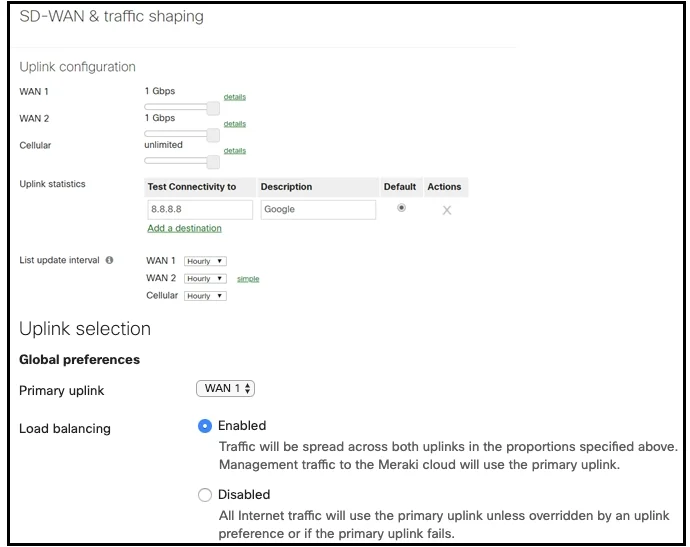
500-220 question #61 exhibit

Options

  • AAll flows alternate in a 5:1 ratio.
  • BAll flows alternate in a 2:1 ratio.
  • CAll flows agrees via WAN 1:1 ratio.
  • DAll flows egress via WAN1.

How the community answered

(23 responses)
  • A
    9% (2)
  • B
    4% (1)
  • C
    83% (19)
  • D
    4% (1)

Explanation

Option C is correct because the exhibit likely shows two WAN links configured with equal weight or cost (e.g., both set to the same bandwidth metric or routing preference), which causes the router/SD-WAN device to distribute internet-bound flows in an equal 1:1 ratio - one flow to WAN1, the next to WAN2, alternating evenly.

Why the distractors are wrong:

  • A (5:1) and B (2:1) would only apply if the WAN links had unequal weights - for example, WAN1 configured with 5x or 2x the preference/bandwidth of WAN2, which the exhibit does not show.
  • D (all via WAN1) would require WAN2 to be in a standby/failover role rather than active load-balancing, which contradicts the equal-cost configuration shown.

Memory tip: Think "equal config = equal split." When two WAN links share identical metrics or weights in the policy, the ratio is always 1:1 - if the numbers were unequal, the ratio would reflect those numbers directly.

Topics

#WAN load balancing#SD-WAN routing#traffic distribution#failover

Community Discussion

No community discussion yet for this question.

Full 500-220 Practice