
Cisco
500-220 · Question #44
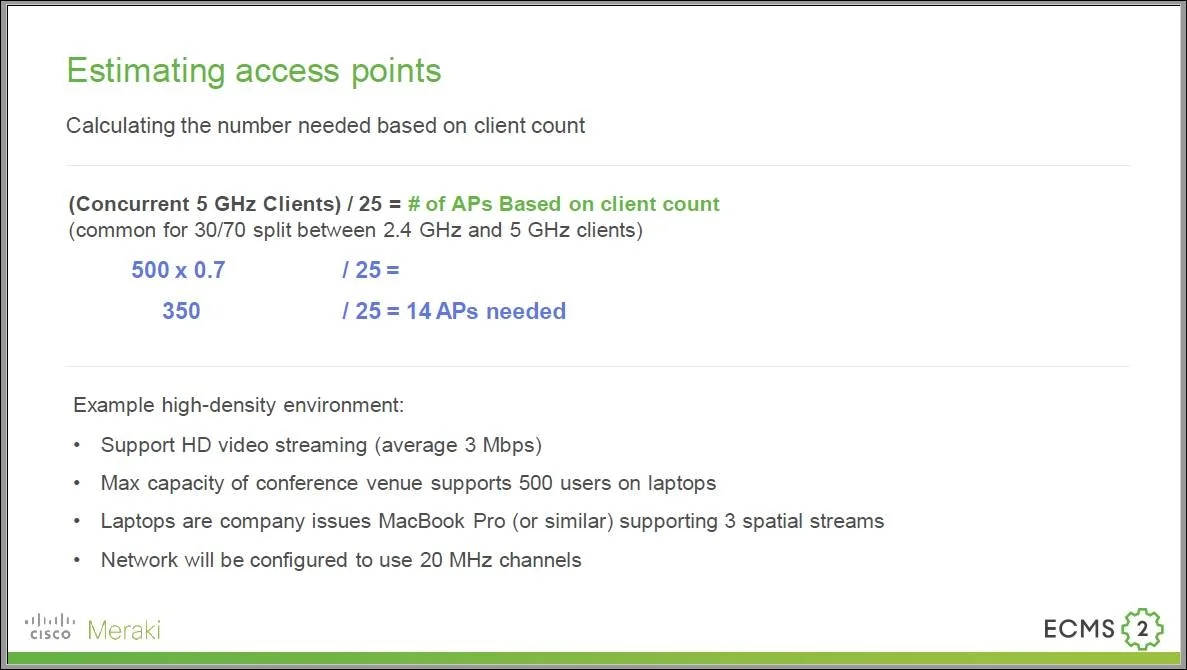
One thousand concurrent users stream video to their laptops. A 30/70 split between 2.4 GHz and 5 GHz is used. Based on client count, how many APs (rounded to the nearest whole number) are needed?
Sign in or unlock 500-220 to reveal the answer and full explanation for question #44. The question stem and answer options stay visible for context.
Cisco Meraki Wireless Solutions
Question
One thousand concurrent users stream video to their laptops. A 30/70 split between 2.4 GHz and 5 GHz is used. Based on client count, how many APs (rounded to the nearest whole number) are needed?
Exhibit
Options
- A26
- B28
- C30
- D32
Unlock 500-220 to see the answer
You've previewed enough free 500-220 questions. Unlock 500-220 for full answers, explanations, the timed quiz mode, progress tracking, and the master PDF. Question stem and options stay visible so you can still see what's on the exam.
Topics
#AP capacity planning#band distribution#client density#wireless design