nerdexam
Cisco

352-011 · Question #28

Refer the exhibit. You have designed a IPv6 migration plan, and now you need to determine the impact on the existing IPv4 network. Which is likely to happen when you enable IPv6 routing on the link…

The correct answer is D. Loopback reachability between all routers for IPv4 is lost. When IS-IS (Integrated IS-IS) is the routing protocol in use, it runs a single routing process that carries both IPv4 and IPv6 topology information. Enabling IPv6 on R3's interface toward R2 while R2 is not yet configured for IPv6 causes the IS-IS adjacency between R3 and R2 to…

Network Design Methodology and Principles

Question

Refer the exhibit. You have designed a IPv6 migration plan, and now you need to determine the impact on the existing IPv4 network. Which is likely to happen when you enable IPv6 routing on the link between R3 and R2, starting at R3?

Exhibit
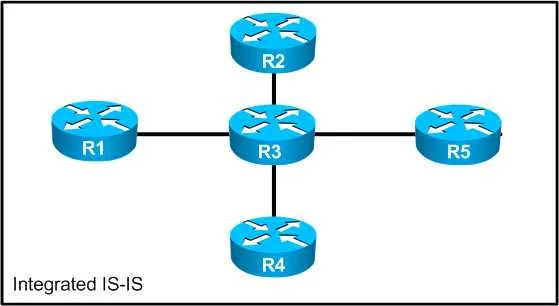
352-011 question #28 exhibit

Options

  • AR3 advertises the link from R3-R2 to R1, R4 and R5 only.
  • BR2 receives an IPv6 default route from R3.
  • COnly R3 and R2 have IPv4 and IPv6 reachability.
  • DLoopback reachability between all routers for IPv4 is lost.
  • EAll routers except R2 are reachable through IPv4.

How the community answered

(37 responses)
  • A
    3% (1)
  • B
    22% (8)
  • C
    11% (4)
  • D
    59% (22)
  • E
    5% (2)

Explanation

When IS-IS (Integrated IS-IS) is the routing protocol in use, it runs a single routing process that carries both IPv4 and IPv6 topology information. Enabling IPv6 on R3's interface toward R2 while R2 is not yet configured for IPv6 causes the IS-IS adjacency between R3 and R2 to collapse - and because IS-IS carries IPv4 prefix advertisements through that same adjacency, loopback reachability for all routers is lost network-wide, not just between R3 and R2.

Why the distractors are wrong:

  • A is wrong because IS-IS doesn't let you selectively advertise a link to specific neighbors; adjacencies either form or they don't.
  • B is wrong because enabling IPv6 routing on an interface does not automatically generate or redistribute a default route - that requires explicit configuration.
  • C is wrong because the disruption isn't isolated to R3 and R2; the broken IS-IS adjacency propagates routing failures across the entire domain.
  • E is wrong because it's not just R2 that loses reachability - the missing IS-IS adjacency removes R3's loopback (and any routes behind it) from every router's table.

Memory tip: "IS-IS is Integrated - one process, one fate." If the IS-IS adjacency drops, it takes both IPv4 and IPv6 routing information down with it, unlike OSPF where OSPFv2 and OSPFv3 are completely separate processes that fail independently.

Topics

#IPv6 migration#routing protocols#IPv4/IPv6 coexistence#configuration impact

Community Discussion

No community discussion yet for this question.

Full 352-011 Practice