
350-801 · Question #229
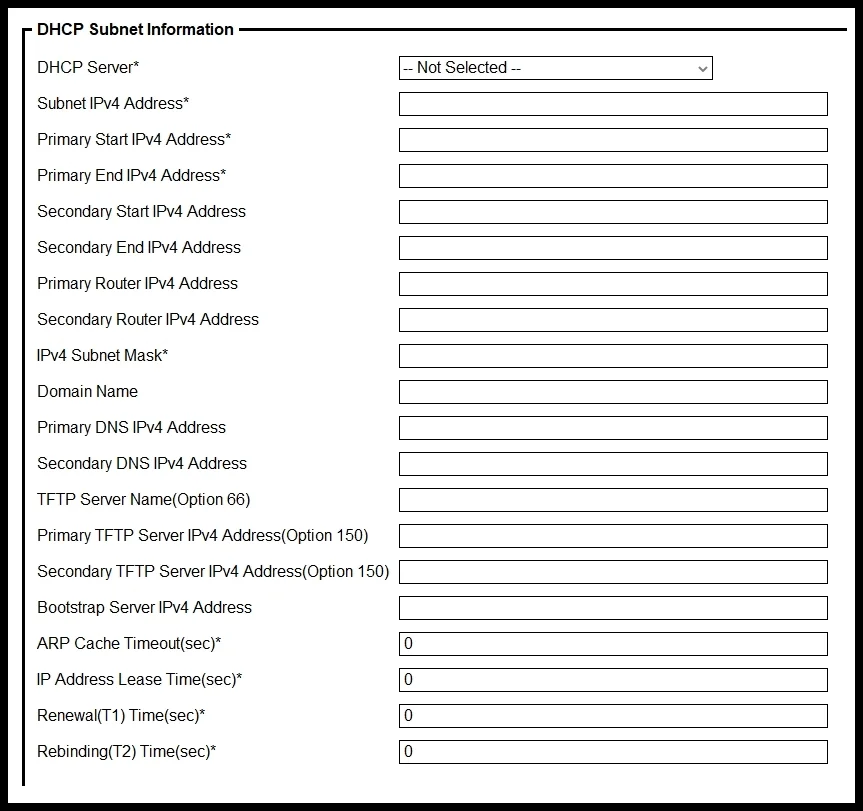
Refer to the exhibit. An engineer must configure DHCP service on the Cisco UCM. In which field must the engineer configure the server IP to provide the configuration files to the endpoints?
The correct answer is B. Primary TFTP Server IPv4 Address (Option 150). Cisco IP phones use DHCP to obtain their network configuration. After receiving an IP address, they rely on DHCP Option 150 (or Option 66) to learn the TFTP server address. The phone then contacts the TFTP server to download its firmware and configuration file. In Cisco UCM's…
Question
Refer to the exhibit. An engineer must configure DHCP service on the Cisco UCM. In which field must the engineer configure the server IP to provide the configuration files to the endpoints?
Exhibit
Options
- APrimary Router IPv4 Address
- BPrimary TFTP Server IPv4 Address (Option 150)
- CPrimary Start IPv4 Address
- DBootstrap Server IPv4 Address
How the community answered
(38 responses)- A5% (2)
- B89% (34)
- C3% (1)
- D3% (1)
Explanation
Cisco IP phones use DHCP to obtain their network configuration. After receiving an IP address, they rely on DHCP Option 150 (or Option 66) to learn the TFTP server address. The phone then contacts the TFTP server to download its firmware and configuration file. In Cisco UCM's built-in DHCP server, the 'Primary TFTP Server IPv4 Address (Option 150)' field is specifically where you enter the IP address of the TFTP server (typically the UCM publisher or a dedicated TFTP server). Without this, phones cannot locate their configuration files and will fail to register. Option 150 is Cisco's vendor-specific extension, preferred over the standard Option 66 in Cisco environments.
Topics
Community Discussion
No community discussion yet for this question.