
Cisco
350-601 · Question #591
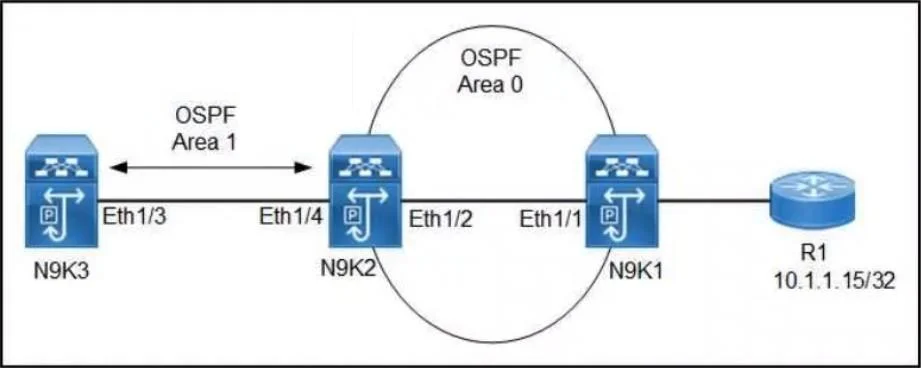
Refer to the exhibit. The network 10.1.1.15/32 is advertised to N9K1. N9K2 and N9K3 OSPF neighbors in area 1. Which configuration advertises network 10.1.1.15/32 as LSA type 7 to N9K3?
Sign in or unlock 350-601 to reveal the answer and full explanation for question #591. The question stem and answer options stay visible for context.
Network
Question
Refer to the exhibit. The network 10.1.1.15/32 is advertised to N9K1. N9K2 and N9K3 OSPF neighbors in area 1. Which configuration advertises network 10.1.1.15/32 as LSA type 7 to N9K3?
Exhibit
Options
- AN9K2(config-router)# area 1 nssa
- BN9K2 (config-router)# area 1 stub no-summary
- CN9K1 (config-router)# area 0 stub no-summary
- DN9K1(config-router)# area 0 nssa
Unlock 350-601 to see the answer
You've previewed enough free 350-601 questions. Unlock 350-601 for full answers, explanations, the timed quiz mode, progress tracking, and the master PDF. Question stem and options stay visible so you can still see what's on the exam.
Topics
#OSPF#LSA Type 7#NSSA#Routing Protocols