
Cisco
350-601 · Question #553
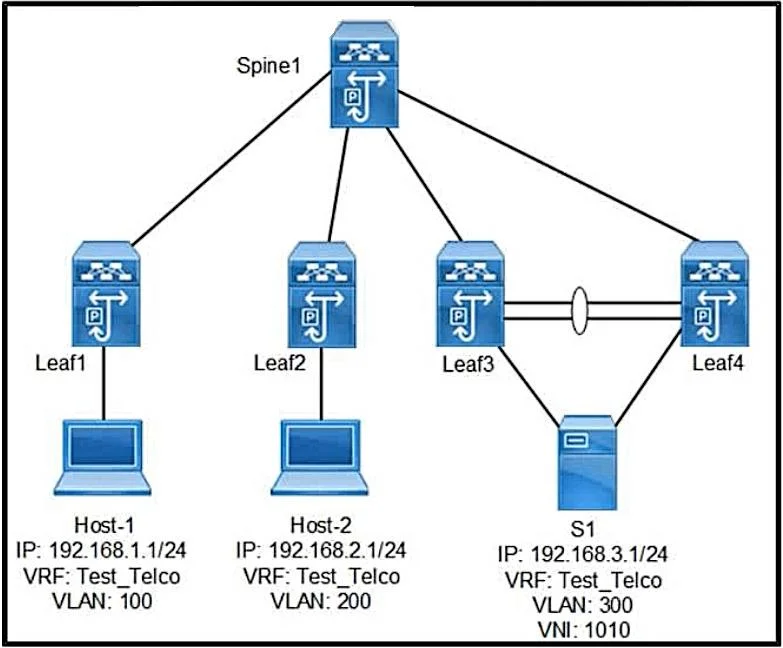
Refer to the exhibit. A VXLAN data center fabric consists of three hosts mapped to different VLANs. Ingress VTEPs perform Layer 2 bridging and Layer 3 routing. Egress VTEPs only perform a Layer 2…
Sign in or unlock 350-601 to reveal the answer and full explanation for question #553. The question stem and answer options stay visible for context.
Network
Question
Refer to the exhibit. A VXLAN data center fabric consists of three hosts mapped to different VLANs. Ingress VTEPs perform Layer 2 bridging and Layer 3 routing. Egress VTEPs only perform a Layer 2 bridging lookup. Which VNI values must be set to allow inter-VNI communication?
Exhibit
Options
- AVLAN 100 to Layer 2 VNI 2020
- BVLAN 100 to Layer 2 VNI 2020
- CVLAN 100 to Layer 2 VNI 2020
- DVLAN 100 to Layer 2 VNI 1010
Unlock 350-601 to see the answer
You've previewed enough free 350-601 questions. Unlock 350-601 for full answers, explanations, the timed quiz mode, progress tracking, and the master PDF. Question stem and options stay visible so you can still see what's on the exam.
Topics
#VXLAN#VNI mapping#Network Virtualization#Data Center Networking