
350-501 · Question #565
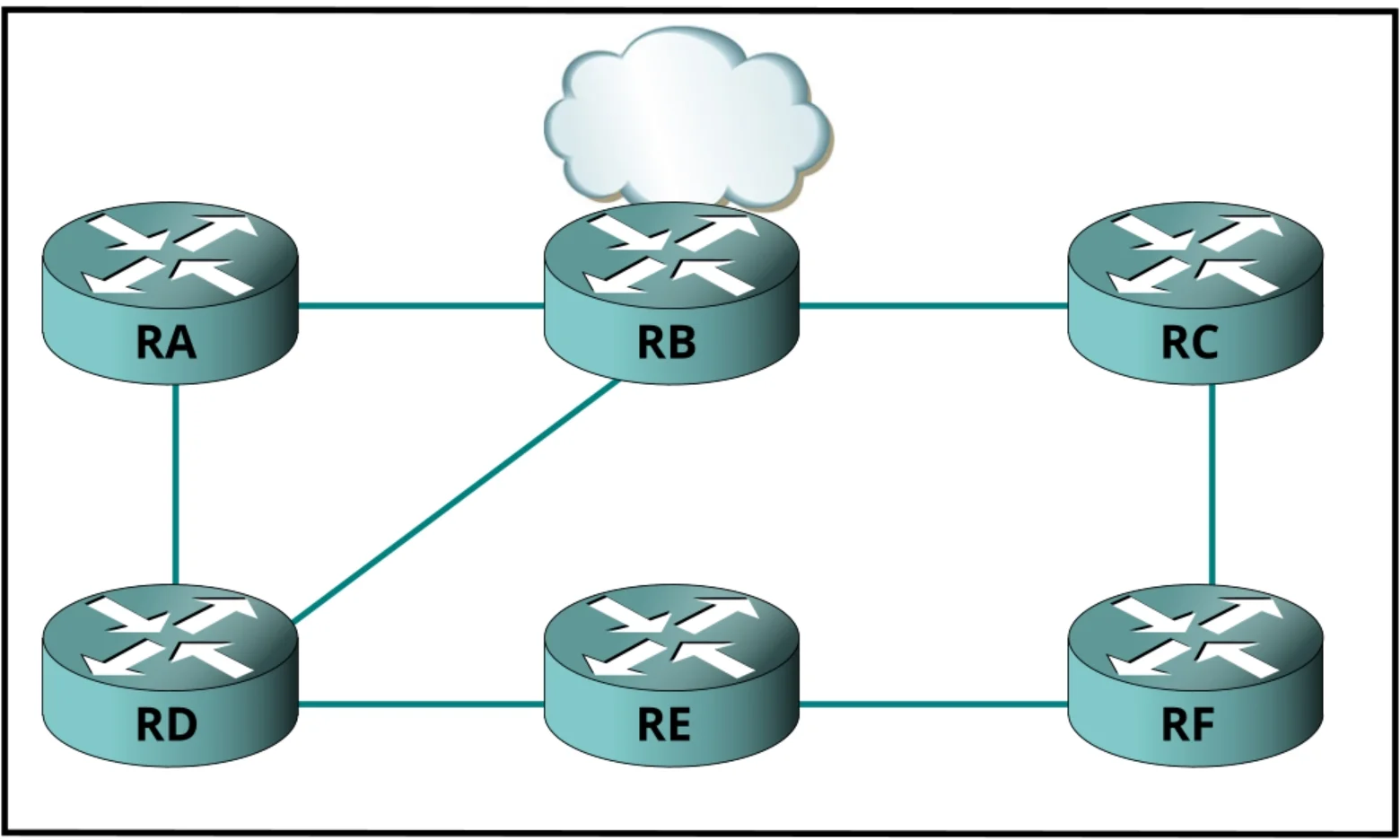
Refer to the exhibit. The network is running OSPF, and access to the internet is provided through router RB. Router RA connects to several servers that provide services to users connected to RC and…
The correct answer is D. Implement class maps to categorize traffic and apply them to policies to manage traffic flow. To mitigate future congestion and maintain network performance when servers are heavily used, the team should implement Quality of Service (QoS) using class maps to categorize traffic and applying policies to manage its flow.
Question
Refer to the exhibit. The network is running OSPF, and access to the internet is provided through router RB. Router RA connects to several servers that provide services to users connected to RC and RF. User traffic is growing, and the engineering team wants to mitigate the future potential for congestion when the servers are experiencing heavy use. Which action must the team take to maintain better network performance?
Exhibit
Options
- AImplement MPLS and install a Cisco MPLS TE tunnel to route high-priority traffic via a preferred
- BImplement ACLs to manage traffic flowing over individual links.
- CImplement OSPF point-to-point links to eliminate the need for DR election and the associated
- DImplement class maps to categorize traffic and apply them to policies to manage traffic flow.
How the community answered
(35 responses)- A14% (5)
- B6% (2)
- C6% (2)
- D74% (26)
Why each option
To mitigate future congestion and maintain network performance when servers are heavily used, the team should implement Quality of Service (QoS) using class maps to categorize traffic and applying policies to manage its flow.
While MPLS Traffic Engineering (TE) tunnels can be used for explicit path routing, implementing it solely for congestion mitigation in this scenario is a complex solution; QoS policies are more fundamental for per-packet congestion avoidance.
ACLs are primarily for security filtering (permit/deny) and do not directly manage traffic flow in terms of prioritization, bandwidth allocation, or congestion avoidance.
Implementing OSPF point-to-point links would remove DR/BDR elections but does not address data plane congestion or allow for traffic prioritization needed to maintain performance during heavy server use.
To mitigate congestion and maintain better network performance for server traffic, implementing Quality of Service (QoS) is essential. This involves using class maps to identify and categorize different types of traffic (e.g., high-priority server traffic), and then applying policies to these classes. These policies can define actions like policing, shaping, or prioritizing traffic, ensuring critical applications receive adequate bandwidth and experience less delay during heavy network use.
Concept tested: QoS for congestion management (Class Maps and Policy Maps)
Source: https://www.cisco.com/c/en/us/td/docs/ios-xml/ios/qos_plcshp/configuration/15-mt/qos-plcshp-15-mt-book/qos-plcshp-oview.html
Topics
Community Discussion
No community discussion yet for this question.