
350-501 · Question #556
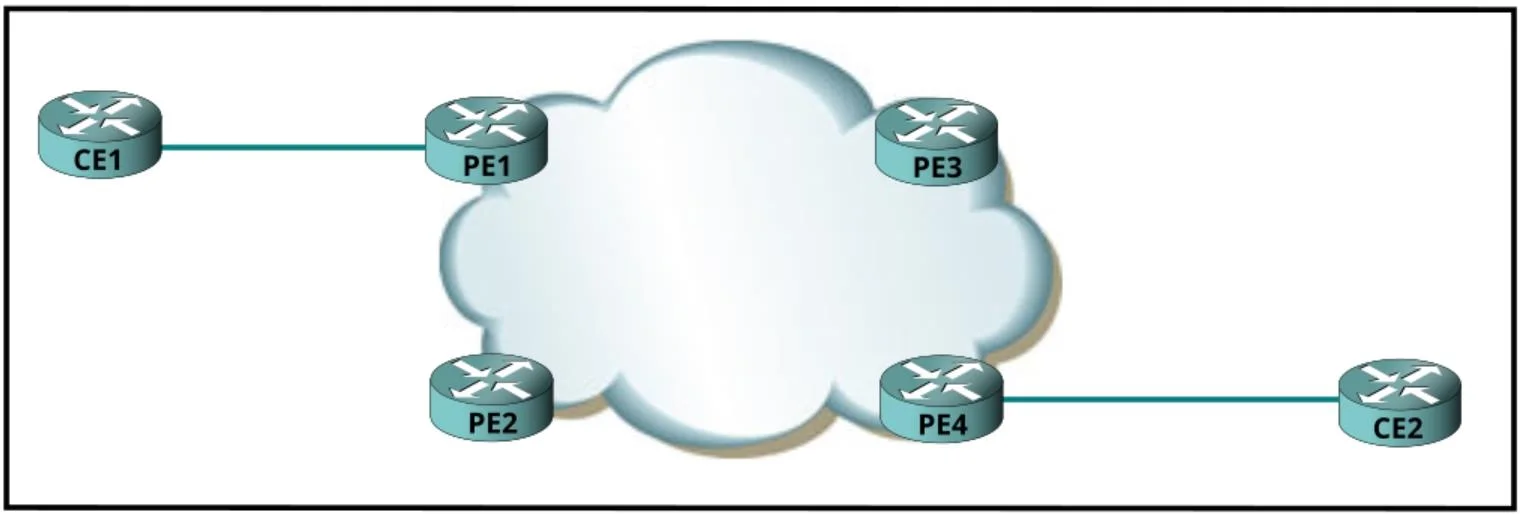
Refer to the exhibit. IS-IS is configured in the service provider network. Data is shared between the customer branch offices via CE1 and CE2. The service provider engineering team is implementing…
The correct answer is B. Implement LDP sync so that IGP and LDP must be up simultaneously. To prevent packet loss due to synchronization conflicts when implementing MPLS in an IS-IS network, LDP synchronization must be implemented.
Question
Refer to the exhibit. IS-IS is configured in the service provider network. Data is shared between the customer branch offices via CE1 and CE2. The service provider engineering team is implementing MPLS to assist packet switching through the customer VPN. The team must ensure there is no packet loss due to synchronization conflicts. Which action meets the requirement?
Exhibit
Options
- AImplement IS-IS between the PEs and CEs to share VPN routes.
- BImplement LDP sync so that IGP and LDP must be up simultaneously.
- CImplement static routes to CE1 and CE2 from their respective connected PEs.
- DImplement mutual redistribution between BGP and the service provider IGP.
How the community answered
(28 responses)- A7% (2)
- B79% (22)
- C4% (1)
- D11% (3)
Why each option
To prevent packet loss due to synchronization conflicts when implementing MPLS in an IS-IS network, LDP synchronization must be implemented.
Implementing IS-IS between PEs and CEs would typically be for IGP routing within a VPN (VPNv4/VPNv6) and not directly related to preventing LDP/IGP synchronization issues in the service provider core.
Implementing LDP synchronization ensures that LDP (Label Distribution Protocol) advertises labels for a specific prefix only after the IGP (IS-IS in this case) has fully converged and established reachability to the next-hop for that prefix. This prevents traffic blackholing by ensuring that a router does not use an MPLS LSP before the underlying IP forwarding path is stable, thus avoiding packet loss due to synchronization conflicts.
Implementing static routes to CE1 and CE2 from their respective connected PEs would fix reachability but bypass the dynamic nature and benefits of IGP and LDP for MPLS, and would not inherently solve synchronization issues for other dynamically learned routes.
Implementing mutual redistribution between BGP and the service provider IGP (IS-IS) would introduce routing complexity and potential for loops, and is not the specific mechanism to prevent LDP/IGP synchronization conflicts in an MPLS environment.
Concept tested: MPLS LDP synchronization with IGP
Source: https://www.cisco.com/c/en/us/td/docs/ios-xml/ios/mpls/configuration/xe-3s/mpls-xe-3s-book/mp-ldp-sync.html
Topics
Community Discussion
No community discussion yet for this question.