
350-501 · Question #486
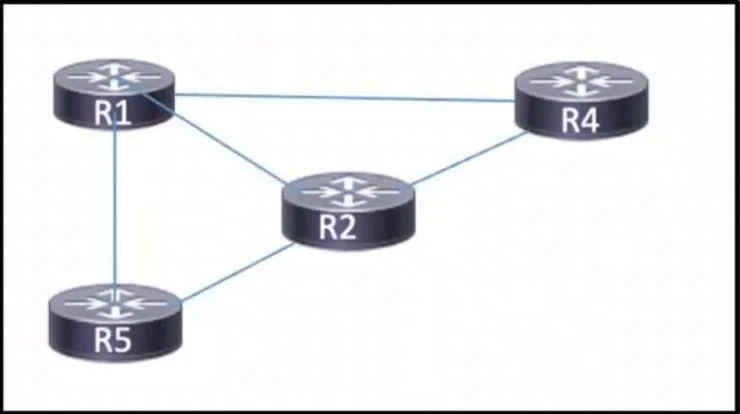
Refer to the exhibit. MPLS is running in the network with OSPF as the IGP. Full routes are shared between the routers, and each connected link has an MPLS neighbor relationship. A network engineer…
The correct answer is A. Implement LDP session protection on the network. LDP session protection ensures that Label Distribution Protocol (LDP) neighbor relationships are maintained even if a directly connected link goes down. This is achieved by enabling targeted LDP hellos, allowing the LDP session to persist over an alternate path if a direct link…
Question
Refer to the exhibit. MPLS is running in the network with OSPF as the IGP. Full routes are shared between the routers, and each connected link has an MPLS neighbor relationship. A network engineer must update the network configuration so that it will maintain LDP neighbor relationships if a directly connected link goes down. Which action must the engineer take as part of the process?
Exhibit
Options
- AImplement LDP session protection on the network.
- BImplement LDP sync on links with a greater risk of faults.
- CImplement Unified MPLS to unify the OSPF areas.
- DImplement MPLS OAM with BFDP on the links.
How the community answered
(28 responses)- A79% (22)
- B11% (3)
- C7% (2)
- D4% (1)
Explanation
LDP session protection ensures that Label Distribution Protocol (LDP) neighbor relationships are maintained even if a directly connected link goes down. This is achieved by enabling targeted LDP hellos, allowing the LDP session to persist over an alternate path if a direct link fails. This configuration is particularly useful in MPLS networks where maintaining label bindings during failures is critical for uninterrupted service. By implementing LDP session protection, the network can provide enhanced resilience and prevent disruption to MPLS traffic.
Topics
Community Discussion
No community discussion yet for this question.