
350-501 · Question #177
A network engineer is configuring Flexible NetFlow and enters these commands. What are two results of implementing this feature instead of traditional NetFlow? (Choose two.)
The correct answer is A. CPU and memory utilization are reduced. D. The number of packets to be analyzed are reduced. Flexible NetFlow can optimize resource usage and reduce the amount of data processed compared to traditional NetFlow by allowing for customized flow record keys and efficient data collection.
Question
A network engineer is configuring Flexible NetFlow and enters these commands. What are two results of implementing this feature instead of traditional NetFlow? (Choose two.)
Exhibit
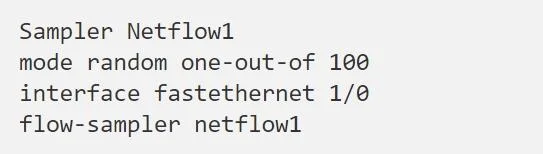
Options
- ACPU and memory utilization are reduced.
- BOnly the flows of top 100 talkers are exported.
- CThe data export flow is more secure
- DThe number of packets to be analyzed are reduced.
- EThe accuracy of the data to be analyzed is improved.
How the community answered
(59 responses)- A71% (42)
- B3% (2)
- C8% (5)
- E17% (10)
Why each option
Flexible NetFlow can optimize resource usage and reduce the amount of data processed compared to traditional NetFlow by allowing for customized flow record keys and efficient data collection.
Flexible NetFlow allows for highly customized flow definitions and aggregation, which can lead to more efficient resource utilization (CPU and memory) on the router compared to the fixed, broader collection of traditional NetFlow by collecting only the specific data points needed.
While Flexible NetFlow is highly customizable, exporting only top talkers requires specific configuration and is not an inherent default result of the feature itself; traditional NetFlow data can also be filtered post-collection.
The security of data export flow is primarily related to the transport protocol (e.g., using TLS with IPFIX) and not an inherent feature that makes Flexible NetFlow more secure than traditional NetFlow; both can use secure transport if configured.
Flexible NetFlow supports sampling, where only a subset of packets is analyzed to derive flow information, which significantly reduces the processing load and the number of packets that need full analysis compared to traditional NetFlow.
When sampling is used in Flexible NetFlow to reduce packet analysis, the accuracy of the data for very granular traffic analysis might actually be reduced, as not all packets are observed.
Concept tested: Flexible NetFlow advantages over Traditional NetFlow
Source: https://www.cisco.com/c/en/us/td/docs/ios-xml/ios/netflow/configuration/xe-16-9/nf-xe-16-9-book/nf-overview-xe.html
Topics
Community Discussion
No community discussion yet for this question.