
350-401 · Question #731
Drag and Drop Question Drag and drop the characteristics from the left onto the deployment types on the right. Answer:
The correct answer is used to make Layer 2 forwarding decisions; records MAC address, port of arrival, VLAN and time stamp; used to build IP routing tables; stores ACL, QoS, and other upper-Layer information. The correct arrangement maps characteristics to their respective tables: the MAC Address Table (CAM table) is used for Layer 2 forwarding decisions and records MAC address, port of arrival, VLAN, and timestamp, while the IP Routing Table (RIB) is used to build IP routing…
Question
Drag and Drop Question Drag and drop the characteristics from the left onto the deployment types on the right. Answer:
Exhibits
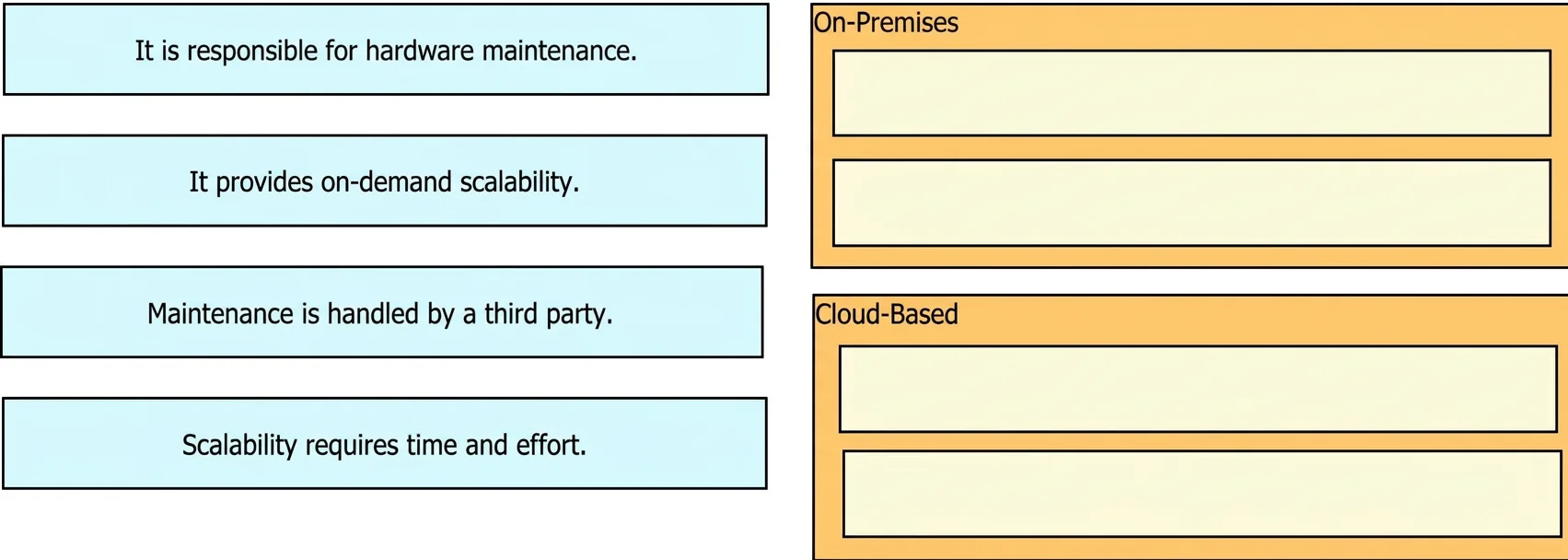
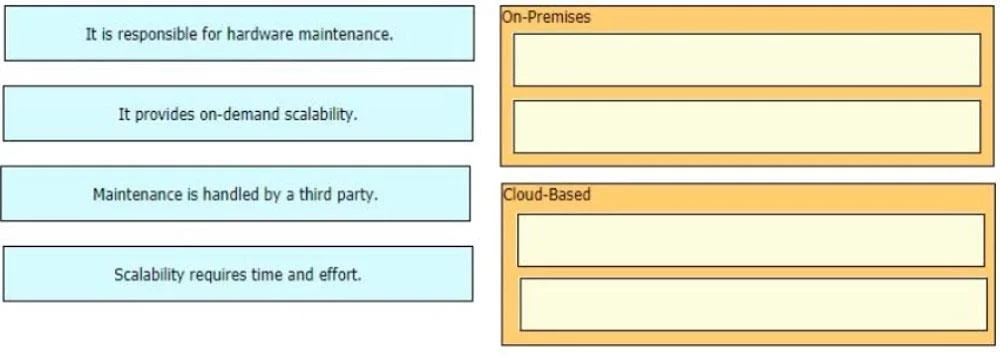
Answer Area
Drag items
Correct arrangement
- used to make Layer 2 forwarding decisions
- records MAC address, port of arrival, VLAN and time stamp
- used to build IP routing tables
- stores ACL, QoS, and other upper-Layer information
Explanation
The correct arrangement maps characteristics to their respective tables: the MAC Address Table (CAM table) is used for Layer 2 forwarding decisions and records MAC address, port of arrival, VLAN, and timestamp, while the IP Routing Table (RIB) is used to build IP routing tables, and the TCAM (Ternary Content Addressable Memory) stores ACL, QoS, and other upper-layer information. Each characteristic aligns with the specific function and data stored by that table type in a network device's switching and routing architecture. Understanding these distinctions is critical because confusing CAM, RIB, and TCAM functions represents a fundamental misunderstanding of how switches and routers make forwarding decisions at different OSI layers.
Topics
Community Discussion
No community discussion yet for this question.