
350-401 · Question #199
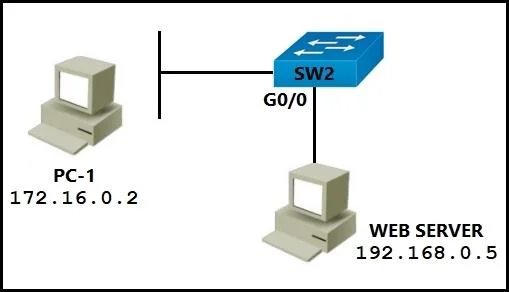
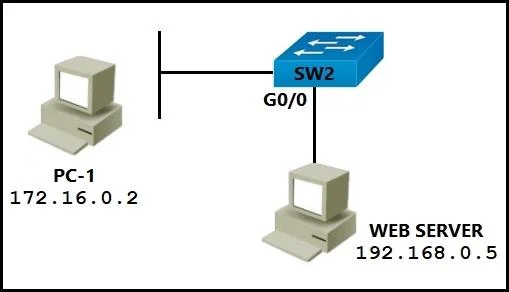
Refer to the exhibit. PC-1 must access the web server on port 8080. To allow this traffic, which statement must be added to an access control list that is applied on SW2 port G0/0 in the inbound…
The correct answer is C. permit host 192.168.0.5 eq 8080 host 172.16.0.2. Explanation Option C is correct because when an ACL is applied inbound on SW2's G0/0 port, it inspects traffic arriving at that interface - meaning the traffic coming from the web server (source: 192.168.0.5) destined for PC-1 (destination: 172.16.0.2). The port number…
Question
Refer to the exhibit. PC-1 must access the web server on port 8080. To allow this traffic, which statement must be added to an access control list that is applied on SW2 port G0/0 in the inbound direction?
Exhibits
Options
- Apermit host 172.16.0.2 host 192.168.0.5 eq 8080
- Bpermit host 192.168.0.5 host 172.16.0.2 eq 8080
- Cpermit host 192.168.0.5 eq 8080 host 172.16.0.2
- Dpermit host 192.168.0.5 it 8080 host 172.16.0.2
How the community answered
(34 responses)- A6% (2)
- B12% (4)
- C59% (20)
- D24% (8)
Explanation
Explanation
Option C is correct because when an ACL is applied inbound on SW2's G0/0 port, it inspects traffic arriving at that interface - meaning the traffic coming from the web server (source: 192.168.0.5) destined for PC-1 (destination: 172.16.0.2). The port number qualifier eq 8080 must follow the source address (192.168.0.5) because the web server is the one responding from port 8080, making the syntax: permit host 192.168.0.5 eq 8080 host 172.16.0.2.
Why the others are wrong:
- Option A reverses the logic entirely - it matches traffic from PC-1 to the web server, which would suit an outbound ACL or one placed on the opposite interface.
- Option B has the correct source and destination order but incorrectly places
eq 8080after the destination host, which doesn't match the standard ACL syntax for filtering on the source port. - Option D uses
lt(less than) instead ofeq(equal), which would permit traffic on any port below 8080, not specifically port 8080.
Memory Tip: For inbound ACLs, always think "Who is knocking on the door FROM this interface?" - that entity becomes your source. The port qualifier always immediately follows the address it belongs to.
Topics
Community Discussion
No community discussion yet for this question.