
350-001 · Question #181
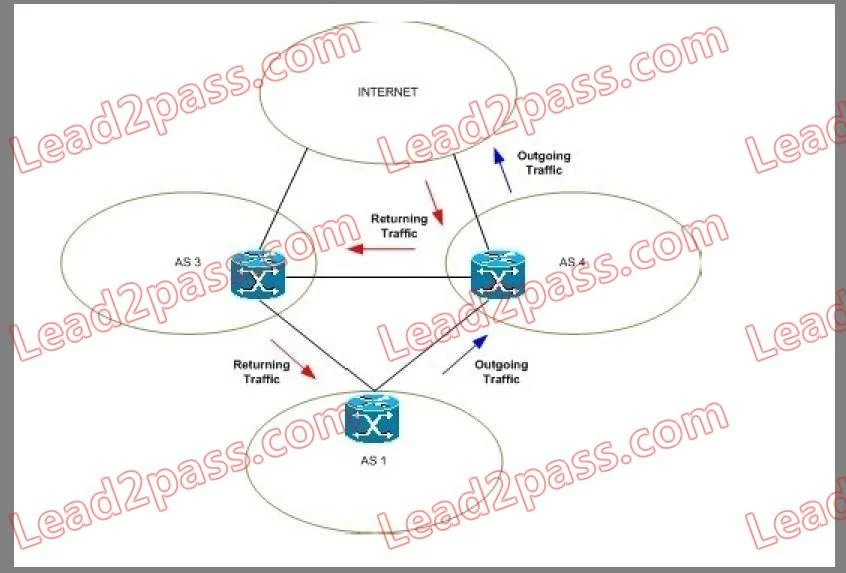
Refer to the exhibit. BGP-4 routing to the Internet, in normal behavior, may create asymmetrical routing for different prefixes. The BGP routing table indicates that traffic should follow the paths…
The correct answer is D. Unicast Reverse Path Forwarding is configured in strict mode in this router. When administrators use Unicast RPF in strict mode, the packet must be received on the interface that the router would use to forward the return packet. Unicast RPF configured in strict mode may drop legitimate traffic that is received on an interface that was not the router's…
Question
Refer to the exhibit. BGP-4 routing to the Internet, in normal behavior, may create asymmetrical routing for different prefixes. The BGP routing table indicates that traffic should follow the paths indicated in the exhibit, but packets are not going further than the border router in AS 4. What could be the cause of this problem?
Exhibit
Options
- ATCP Intercept is configured in AS 4.
- BUnicast Reverse Path Forwarding is configured in loose mode in this router.
- CPackets may be leaving AS 1 without the BGP routing flag set to 1.
- DUnicast Reverse Path Forwarding is configured in strict mode in this router.
- EThere is a missing Unicast Reverse Path Forwarding configuration.
How the community answered
(50 responses)- A4% (2)
- B6% (3)
- C12% (6)
- D58% (29)
- E20% (10)
Explanation
When administrators use Unicast RPF in strict mode, the packet must be received on the interface that the router would use to forward the return packet. Unicast RPF configured in strict mode may drop legitimate traffic that is received on an interface that was not the router's choice for sending return traffic. Dropping this legitimate traffic could occur when asymmetric routing paths are present in the network.
Topics
Community Discussion
No community discussion yet for this question.