
300-815 · Question #84
A single site reports that when they dial select numbers, the call connects, but they do not get audio. The administrator finds that the calls are not routing out of the normal gateway but out of…
The correct answer is C. Verify that the dial peer of the gateway has the correct destination pattern configured. In a Tail-End Hop-Off (TEHO) scenario, calls are routed over the WAN to a remote site's gateway before being handed off to the PSTN. When a call connects (signaling succeeds) but there is no audio, a common cause is that the remote gateway's dial peer has an incorrect or…
Question
Exhibit
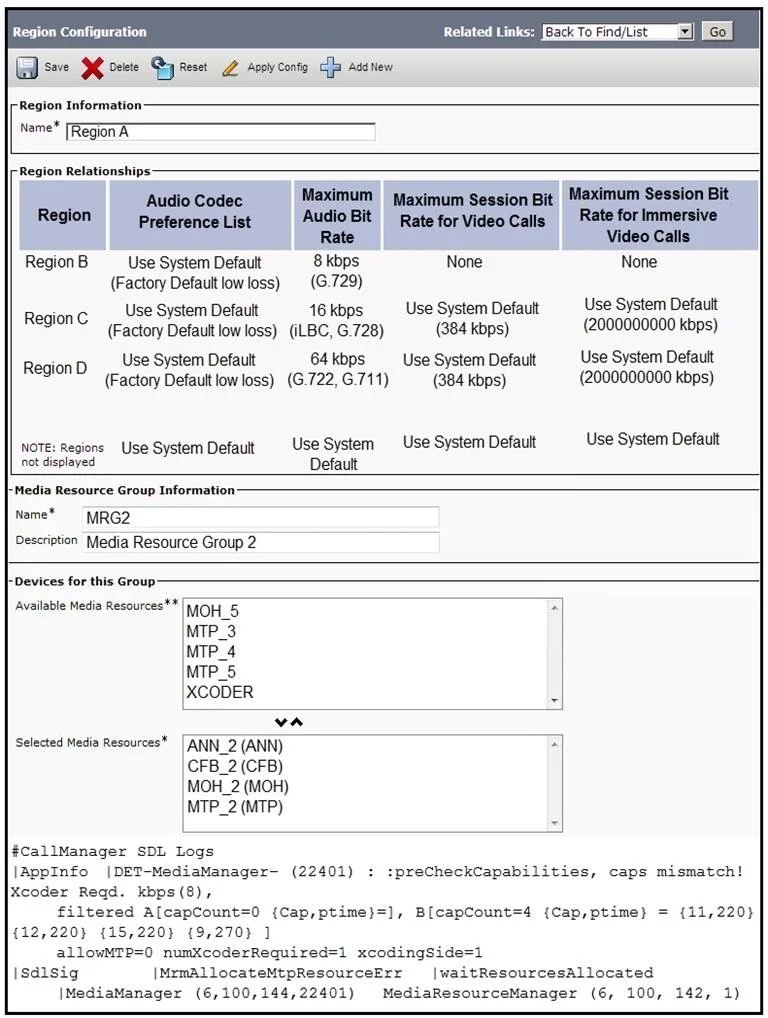
Options
- AVerify that IP routing is correct between the gateway and the IP phone.
- BVerify that the route pattern is not blocking calls to the destination number.
- CVerify that the dial peer of the gateway has the correct destination pattern configured.
- DVerify that the route pattern has the correct calling-party transformation mask.
How the community answered
(32 responses)- A3% (1)
- B16% (5)
- C75% (24)
- D6% (2)
Explanation
In a Tail-End Hop-Off (TEHO) scenario, calls are routed over the WAN to a remote site's gateway before being handed off to the PSTN. When a call connects (signaling succeeds) but there is no audio, a common cause is that the remote gateway's dial peer has an incorrect or missing destination pattern. If the dial peer does not match the outgoing PSTN number correctly, the PSTN leg may not be established properly, breaking the media path for the caller. Since TEHO is identified as the routing cause, verifying the remote gateway's dial-peer destination pattern is the logical next step. Option A (IP routing) would prevent the call from connecting at all. Option B (route pattern blocking) would prevent the call from routing rather than causing one-way audio. Option D (calling-party transformation mask) affects the calling number presentation, not the called-party audio path.
Topics
Community Discussion
No community discussion yet for this question.