
300-625 · Question #4
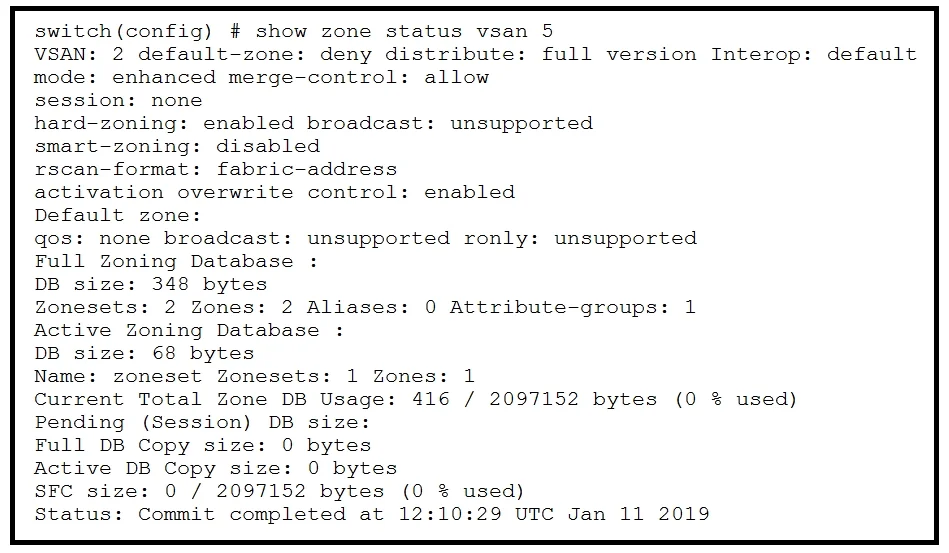
Refer to the exhibit. Device alias information must be merged for two fabrics. Which setting must match on both fabrics before the merge can be performed successfully?
The correct answer is A. device-alias mode. For a successful device alias fabric merge in Cisco MDS/NX-OS environments, the device-alias mode (basic vs. enhanced) must be identical on both fabrics. Enhanced mode uses CFS (Cisco Fabric Services) to distribute device alias databases across the fabric, and if one fabric is…
Question
Refer to the exhibit. Device alias information must be merged for two fabrics. Which setting must match on both fabrics before the merge can be performed successfully?
Exhibit
Options
- Adevice-alias mode
- Bsession
- Cqos
- Dsmart-zoning
How the community answered
(23 responses)- A83% (19)
- B4% (1)
- C4% (1)
- D9% (2)
Explanation
For a successful device alias fabric merge in Cisco MDS/NX-OS environments, the device-alias mode (basic vs. enhanced) must be identical on both fabrics. Enhanced mode uses CFS (Cisco Fabric Services) to distribute device alias databases across the fabric, and if one fabric is in basic mode while the other is in enhanced mode, CFS distribution cannot reconcile the two databases and the merge will be rejected.
Why the distractors are wrong:
- B. session - Configuration sessions are a separate commit-based workflow and have no bearing on device alias merge eligibility.
- C. qos - QoS policies govern traffic prioritization and are completely unrelated to device alias database merging.
- D. smart-zoning - Smart zoning optimizes zone member visibility but is independent of device alias merge requirements.
Memory tip: Think "Mode Must Match before Merge." The mode controls how aliases are distributed (locally vs. fabric-wide via CFS), so both fabrics must agree on the distribution model before they can combine their alias databases.
Topics
Community Discussion
No community discussion yet for this question.