
300-625 · Question #12
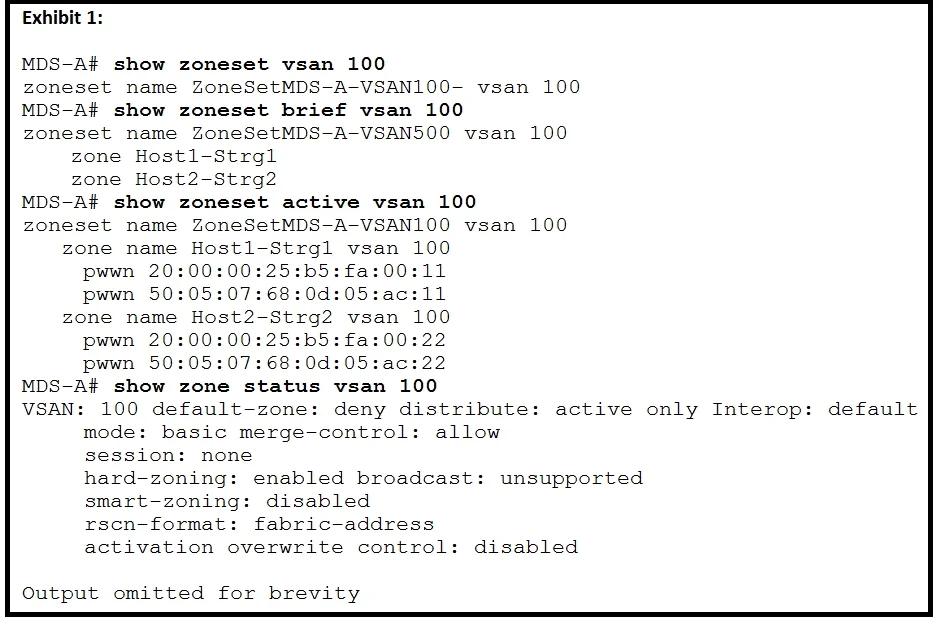
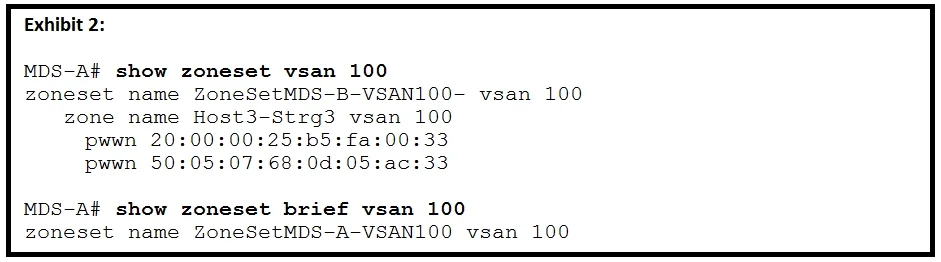
Refer to the exhibits. A storage network engineer activates a zoneset on MDS-A and verifies the successful activation (Exhibit 1). The engineer is then notified that there is a SAN outage (Exhibit…
The correct answer is D. Another network engineer issued the zone default-zone permit vsan 100 command on another. Option D is correct because the zone default-zone permit vsan 100 command on another switch (MDS-B) creates a conflicting default-zone policy across the fabric. In Cisco MDS, when two switches in the same VSAN have mismatched default-zone settings (one set to deny, the other to…
Question
Refer to the exhibits. A storage network engineer activates a zoneset on MDS-A and verifies the successful activation (Exhibit 1). The engineer is then notified that there is a SAN outage (Exhibit 2). What is the cause of the outage?
Exhibits
Options
- AAnother network engineer activated zoneset ZoneSetMDS-B-VSAN100 on MDS-A.
- BAnother network engineer issued the zone mode enhanced vsan 100 command on another
- CAnother network engineer activated the zoneset ZoneSetMDS-B-VSAN100 command on another
- DAnother network engineer issued the zone default-zone permit vsan 100 command on another
How the community answered
(56 responses)- A27% (15)
- B13% (7)
- C5% (3)
- D55% (31)
Explanation
Option D is correct because the zone default-zone permit vsan 100 command on another switch (MDS-B) creates a conflicting default-zone policy across the fabric. In Cisco MDS, when two switches in the same VSAN have mismatched default-zone settings (one set to deny, the other to permit), the zone merge process fails. A zone merge failure causes the VSAN to be isolated/suspended on one of the switches, taking down all traffic - a full SAN outage - even though the first engineer's zoneset activation appeared successful.
Why the distractors are wrong:
- A - Activating a different zoneset on MDS-A (same switch) would simply replace the active zoneset locally; it wouldn't trigger an inter-switch merge conflict that takes down the fabric.
- B - Switching to enhanced zone mode could also trigger a merge issue, but a mode mismatch causes the switches to negotiate before the change takes effect, making it far less likely to be the silent post-activation culprit described.
- C - Activating a zoneset on MDS-B triggers a zone merge, but merges succeed unless there is an actual conflict (such as the default-zone policy mismatch in D); activation alone doesn't guarantee an outage.
Memory tip: Think of default-zone permit as an unlocked door - if one switch locks its door (deny) and another leaves it open (permit), the fabric can't agree and shuts everything down. Always verify show zone status vsan <id> across all fabric switches after changes to catch this mismatch before it causes an outage.
Topics
Community Discussion
No community discussion yet for this question.