
300-620 · Question #85
Refer to the exhibit. An engineer configures the Cisco ACI fabric for VMM integration with ESXi servers that are to be connected to the ACI leaves. The server team requires the network switches to…
The correct answer is B. LB Mode: Destination IP Address and TCP/UDP Port E. LACP Mode: LACP Active. To meet the server team’s requirements for VMM integration with ESXi servers, the two enhanced LAG policies that should be configured are: LB Mode: Destination IP Address and TCP/UDP Port (Option B): This load balancing mode ensures that traffic is evenly distributed across all…
Question
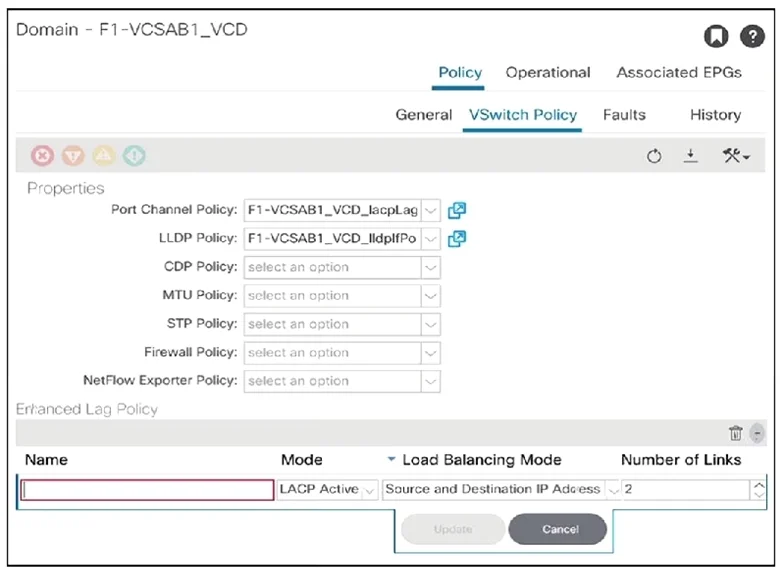
Refer to the exhibit. An engineer configures the Cisco ACI fabric for VMM integration with ESXi servers that are to be connected to the ACI leaves. The server team requires the network switches to initiate the LACP negotiation as opposed to the servers. The LAG group consists of two 10 Gigabit Ethernet links. The server learn also wants to evenly distribute traffic across all available links. Which two enhanced LAG policies meet these requirements? (Choose two.)
Exhibit
Options
- ALACP Mode: LACP Standby
- BLB Mode: Destination IP Address and TCP/UDP Port
- CLB Mode: Source and Destination MAC Address
- DLB Mode: Source IP Address and TCP/UDP Port
- ELACP Mode: LACP Active
How the community answered
(32 responses)- A9% (3)
- B72% (23)
- C3% (1)
- D16% (5)
Explanation
To meet the server team’s requirements for VMM integration with ESXi servers, the two enhanced LAG policies that should be configured are: LB Mode: Destination IP Address and TCP/UDP Port (Option B): This load balancing mode ensures that traffic is evenly distributed across all available links based on the destination IP address and the TCP/UDP port numbers, which can provide a balanced traffic flow for different LACP Mode: LACP Active (Option E): Setting the LACP mode to active allows the network switches to initiate the LACP negotiation, which is necessary when the servers are not configured to initiate the LACP process. These settings ensure that the LAG group consisting of two 10 Gigabit Ethernet links will have traffic evenly distributed across them and that the network switches will initiate the LACP negotiation as required by the server team. x/Cisco-ACI-Virtual-Edge-Configuration-Guide-202/Cisco-ACI-Virtual-Edge-Configuration-Guide- 202_chapter_01.html
Topics
Community Discussion
No community discussion yet for this question.