
300-610 · Question #276
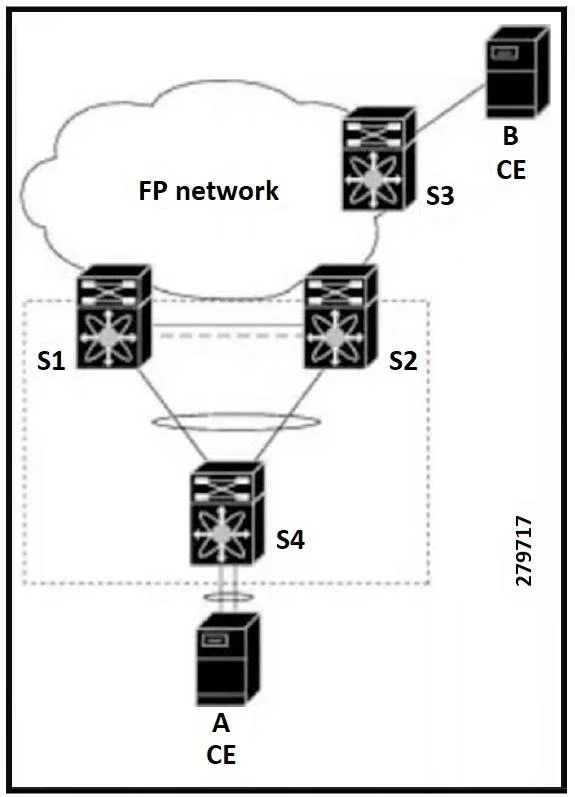
Refer to the exhibit. A Cisco engineer is configuring Cisco Nexus 7000 Series Switches. To simplify initial configuration verification and vPC+/HSRP troubleshooting, the engineer configures the…
The correct answer is A. Configure a VLAN network interface for the same VLAN from both devices. To enable Layer 3 connectivity from each vPC+ peer device in a Cisco Nexus environment with HSRP, a VLAN network interface for the same VLAN must be configured on both devices.
Question
Refer to the exhibit. A Cisco engineer is configuring Cisco Nexus 7000 Series Switches. To simplify initial configuration verification and vPC+/HSRP troubleshooting, the engineer configures the primary vPC+ peer device with the FHRP active router highest priority. The primary FHRP device responds to ARP requests, even though the secondary vPC+ device also forwards the data traffic. Which configuration enables the Layer 3 connectivity from each vPC+ peer device?
Exhibit
Options
- AConfigure a VLAN network interface for the same VLAN from both devices.
- BEnsure that the enhanced Layer 2 license has been installed.
- CSet a restore timer that delays the vPC+ restart.
- DManually configure virtual MAC addresses for any FHRP protocol.
How the community answered
(42 responses)- A74% (31)
- B17% (7)
- C2% (1)
- D7% (3)
Why each option
To enable Layer 3 connectivity from each vPC+ peer device in a Cisco Nexus environment with HSRP, a VLAN network interface for the same VLAN must be configured on both devices.
In a vPC+ and HSRP setup, each vPC+ peer device must have a VLAN network interface (SVI) configured for the shared VLAN, even if only one is the active HSRP router. This ensures that both devices possess the necessary Layer 3 interface to process and forward traffic for that VLAN, allowing Layer 3 connectivity from each peer device as required for routing.
Ensuring the enhanced Layer 2 license is installed is a prerequisite for certain features but not the specific configuration step that enables Layer 3 connectivity from both vPC+ peers for a given VLAN.
Setting a restore timer is related to vPC+ operational stability after a restart or failure, not to the fundamental enablement of Layer 3 connectivity from each peer device.
Manually configuring virtual MAC addresses for FHRP protocols provides consistency but does not, in itself, enable Layer 3 routing functionality from each vPC+ peer device; the SVIs are essential for that.
Concept tested: Cisco Nexus vPC+ and HSRP Layer 3 configuration
Source: https://www.cisco.com/c/en/us/td/docs/switches/datacenter/nexus5000/sw/layer2_features/51_3_n1_1/Cisco_n5k_layer2_config_gd_513_n1_1_chapter23.html
Topics
Community Discussion
No community discussion yet for this question.