
300-420 · Question #393
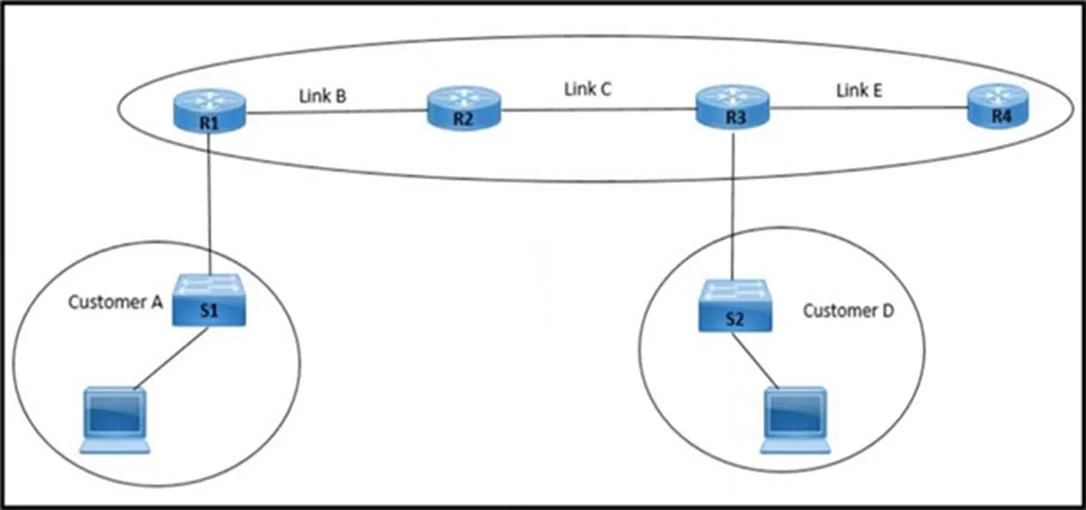
Refer to the exhibit. An architect is designing an IPv4 plan using the 172.20.0.0/16 network. The design must maximize the number of subnets and minimize the number of wasted IP addresses. In…
The correct answer is B. Customer A- 172.20.0.128/25 D. Link B - 172.20.1.68/30. 172.20.0.128/25 for Customer A supports 128 IPs (126 usable), which fits 125 hosts. 172.20.1.0/26 for Customer D supports 64 IPs (62 usable), which fits 62 hosts. /30 subnets (172.20.1.68/30, 172.20.1.72/30, 172.20.1.76/30) provide 4 IPs each (2 usable), ideal for…
Question
Refer to the exhibit. An architect is designing an IPv4 plan using the 172.20.0.0/16 network. The design must maximize the number of subnets and minimize the number of wasted IP addresses. In addition, the plan must allocate a subnet to these customers and links:
- Customer A, which supports 125 hosts
- Customer D, which supports 62 hosts
- Links B, C, and E
Which two configuration sets meet these requirements? (Choose two.)
Exhibit
Options
- ALink B - 172.20.1.70/30
- BCustomer A- 172.20.0.128/25
- CLink B - 172.20.2.132/30
- DLink B - 172.20.1.68/30
- ECustomer A - 172.20.1.0/24
How the community answered
(57 responses)- A12% (7)
- B56% (32)
- C26% (15)
- E5% (3)
Explanation
172.20.0.128/25 for Customer A supports 128 IPs (126 usable), which fits 125 hosts. 172.20.1.0/26 for Customer D supports 64 IPs (62 usable), which fits 62 hosts. /30 subnets (172.20.1.68/30, 172.20.1.72/30, 172.20.1.76/30) provide 4 IPs each (2 usable), ideal for point-to-point links, maximizing subnet usage and minimizing waste.
Topics
Community Discussion
No community discussion yet for this question.