
300-420 · Question #240
Refer to the exhibit. An engineer is designing a redistribution solution for a customer. The customer recently acquired another company and decided to Integrate the new network running RIPv1 with…
The correct answer is A. distribute-lists inbound under the EIGRP process denying RIPv1 learned prefixes. Using distribute-lists inbound under the EIGRP process, you can filter out the RIPv1 learned prefixes. This prevents the prefixes learned via RIPv1 from being redistributed back into EIGRP, thus avoiding potential routing loops during the redistribution process.
Question
Refer to the exhibit. An engineer is designing a redistribution solution for a customer. The customer recently acquired another company and decided to Integrate the new network running RIPv1 with the company's existing network. Which redistribution technique must the engineer select to ensure the multipoint two-way redistribution does not cause routing loops?
Exhibit
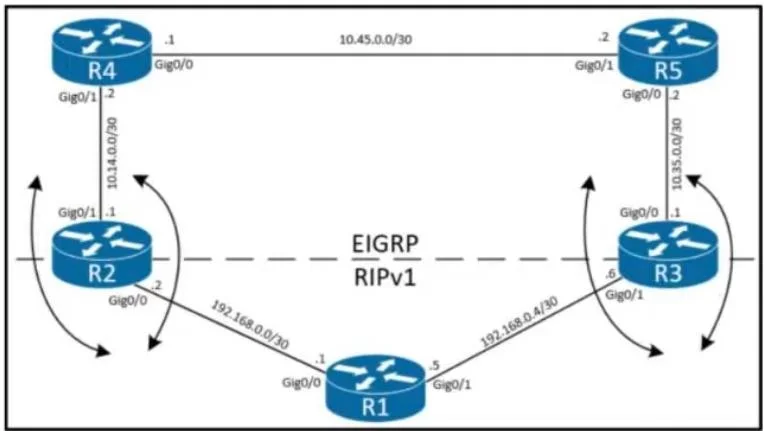
Options
- Adistribute-lists inbound under the EIGRP process denying RIPv1 learned prefixes
- Bdistribute-lists inbound under the RIPv1 process denying EIGRP learned prefixes
- Cdistribute-lists outbound under the EIGRP process denying RIPv1 learned prefixes
- Ddistribute-lists outbound under the RIPv1 process denying EIGRP learned prefixes
How the community answered
(34 responses)- A82% (28)
- B9% (3)
- C6% (2)
- D3% (1)
Explanation
Using distribute-lists inbound under the EIGRP process, you can filter out the RIPv1 learned prefixes. This prevents the prefixes learned via RIPv1 from being redistributed back into EIGRP, thus avoiding potential routing loops during the redistribution process.
Topics
Community Discussion
No community discussion yet for this question.