
300-320 · Question #470
An engineer is designing an IP addressing scheme for a local company that requires multicast for its applications. For security reasons, only explicitly configured devices can be permitted to…
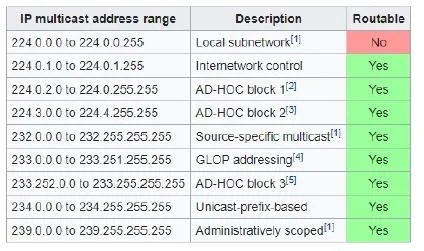
The correct answer is C. SSM; 232.0.0.0/8. Source-Specific Multicast (SSM) requires receivers to explicitly specify the source IP address when joining a multicast group. Only traffic from that configured source is forwarded, preventing unauthorized devices from transmitting to the group. SSM uses the reserved address…
Question
An engineer is designing an IP addressing scheme for a local company that requires multicast for its applications. For security reasons, only explicitly configured devices can be permitted to transmit across the network. Which multicast technology and address range must the engineer select?
Exhibit
Options
- APIM-SM; 232.0.0.0/8
- BASM; 232.0.0.0/8
- CSSM; 232.0.0.0/8
- DSSM; 224.0.0.0/8
How the community answered
(45 responses)- A2% (1)
- B11% (5)
- C80% (36)
- D7% (3)
Explanation
Source-Specific Multicast (SSM) requires receivers to explicitly specify the source IP address when joining a multicast group. Only traffic from that configured source is forwarded, preventing unauthorized devices from transmitting to the group. SSM uses the reserved address range 232.0.0.0/8. Any-Source Multicast (ASM) allows any source to send to a group address without explicit configuration, which does not meet the security requirement. PIM-SM (A, B) is the underlying protocol used with ASM and does not restrict sources. The 224.0.0.0/8 range (D) is used for ASM, not SSM.
Topics
Community Discussion
No community discussion yet for this question.