
300-320 · Question #468
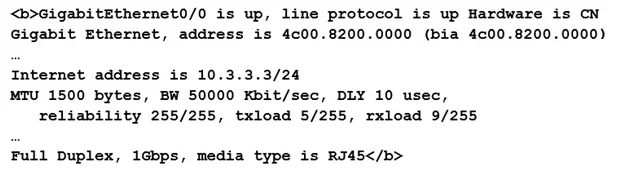
Refer to the exhibit. An engineering team is analyzing the WAN connection for a site that has a 50 Mbps Ethernet circuit. Which technology should be uses to keep the router from overrunning the…
The correct answer is A. shaping. Traffic shaping (A) limits the output rate by buffering excess traffic in a queue and transmitting it smoothly at the configured rate. This is ideal for WAN circuits where the physical interface speed (e.g., 1 Gbps) exceeds the contracted service rate (50 Mbps) - shaping…
Question
Refer to the exhibit. An engineering team is analyzing the WAN connection for a site that has a 50 Mbps Ethernet circuit. Which technology should be uses to keep the router from overrunning the carrier's 50 Mbps rate?
Exhibits
Options
- Ashaping
- BAccess Control List
- CCommitted Information Rate
- DRate-Limit
- EPolicing
How the community answered
(37 responses)- A81% (30)
- B8% (3)
- C3% (1)
- D5% (2)
- E3% (1)
Explanation
Traffic shaping (A) limits the output rate by buffering excess traffic in a queue and transmitting it smoothly at the configured rate. This is ideal for WAN circuits where the physical interface speed (e.g., 1 Gbps) exceeds the contracted service rate (50 Mbps) - shaping ensures traffic never bursts above that rate, preventing carrier-side drops. Policing (E) drops or re-marks traffic that exceeds the rate instead of buffering it, causing more packet loss. ACLs (B) filter traffic but do not control rate. CIR (C) is the committed rate itself, not an enforcement mechanism. Rate-limit (D) is a Cisco IOS policing command, not shaping.
Topics
Community Discussion
No community discussion yet for this question.