
300-320 · Question #14
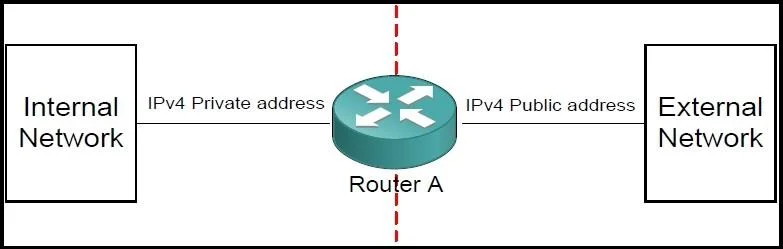
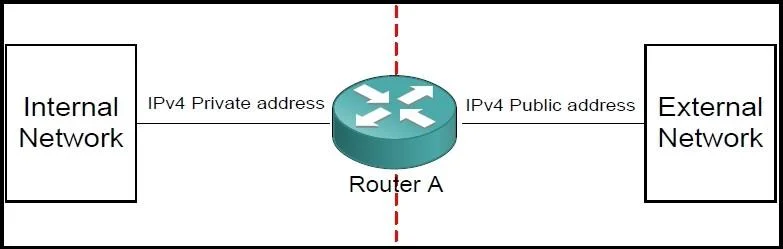
Refer to the exhibit. Which functionality must be enabled on router A to connect two networks for translating private addresses into "legal" public addresses on a one-for-one basis?
The correct answer is B. NAT. Static NAT (Network Address Translation) performs one-to-one mapping of a private IP address to a public IP address. This is exactly what the question describes-translating private addresses into public addresses on a one-for-one basis. PAT (A), also called NAT Overload, maps…
Question
Refer to the exhibit. Which functionality must be enabled on router A to connect two networks for translating private addresses into "legal" public addresses on a one-for-one basis?
Exhibits
Options
- APAT
- BNAT
- CVLAN
- DGARP
- EPPP
How the community answered
(37 responses)- B89% (33)
- C3% (1)
- D3% (1)
- E5% (2)
Explanation
Static NAT (Network Address Translation) performs one-to-one mapping of a private IP address to a public IP address. This is exactly what the question describes-translating private addresses into public addresses on a one-for-one basis. PAT (A), also called NAT Overload, maps many private addresses to a single public IP using different port numbers-a many-to-one relationship, not one-for-one. VLAN (C) is a Layer 2 segmentation technology. GARP (D) is Gratuitous ARP, used for IP conflict detection or failover notification. PPP (E) is a WAN data link protocol. Static NAT is the precise answer for one-for-one address translation.
Topics
Community Discussion
No community discussion yet for this question.