
300-070 · Question #104
Refer to the exhibit. To reach an external number, a user first dials a 9. Which route pattern will be matched if a user dials an international number 011442288223001 and terminates the interdigit…
The correct answer is E. 9011.!#. In Cisco CUCM, international dialing patterns beginning with 9011 use the wildcard '!' for variable-length digit strings, and the '#' suffix allows the user to explicitly terminate digit entry instead of waiting for the interdigit timeout.
Question
Refer to the exhibit. To reach an external number, a user first dials a 9. Which route pattern will be matched if a user dials an international number 011442288223001 and terminates the interdigit timeout?
Exhibit
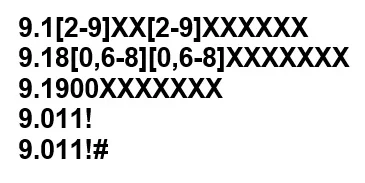
Options
- A9.1[2-9]XX[2-9]XXXXXX.
- B9.18[0,6-8][0,6-8]XXXXXXX.
- C9.1900XXXXXXX.
- D9011.!.
- E9011.!#.
How the community answered
(36 responses)- A8% (3)
- B3% (1)
- C3% (1)
- D11% (4)
- E75% (27)
Why each option
In Cisco CUCM, international dialing patterns beginning with 9011 use the wildcard '!' for variable-length digit strings, and the '#' suffix allows the user to explicitly terminate digit entry instead of waiting for the interdigit timeout.
The pattern 9.1[2-9]XX[2-9]XXXXXX matches standard 10-digit North American Numbering Plan (NANP) calls and cannot match an international number beginning with 011.
The pattern 9.18[0,6-8][0,6-8]XXXXXXX is specific to North American toll-free numbers such as 800, 866, 877, and 888, and does not match international dialing prefixes.
The pattern 9.1900XXXXXXX targets 900 premium-rate numbers within the NANP and cannot match an international number starting with 011.
The pattern 9011.! lacks the '#' terminator, meaning it cannot be terminated by pressing '#' and is superseded by the more specific 9011.!# pattern when '#'-terminated or timeout-based dialing is involved.
The pattern 9011.!# is the standard CUCM route pattern for international calls dialed with a 9 outside access code. The '!' wildcard matches one or more digits to handle variable-length international numbers, and the '#' suffix enables digit collection to end either when the user presses # or when the interdigit timeout expires, making it the correct match for this scenario.
Concept tested: CUCM international route pattern with variable-length '#' terminator
Source: https://www.cisco.com/c/en/us/td/docs/voice_ip_comm/cucm/admin/12_5_1/systemConfig/cucm_b_system-configuration-guide-1251/cucm_b_system-configuration-guide-1251_chapter_0100100.html
Topics
Community Discussion
No community discussion yet for this question.