
200-901 · Question #368
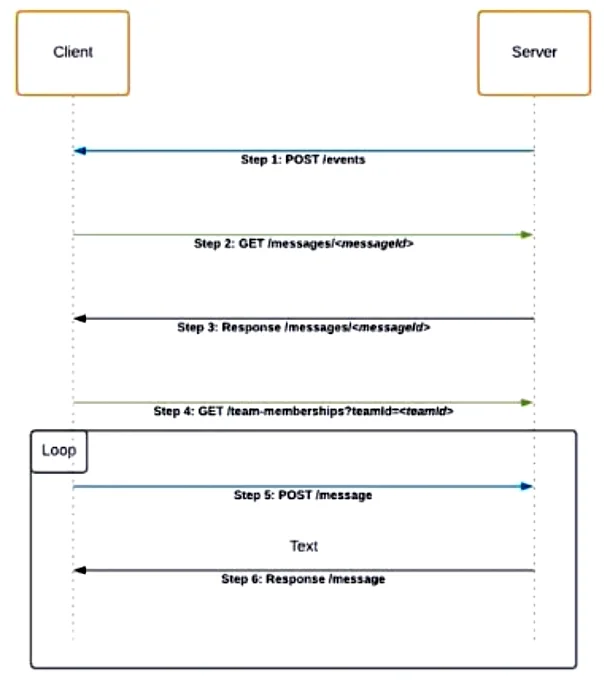
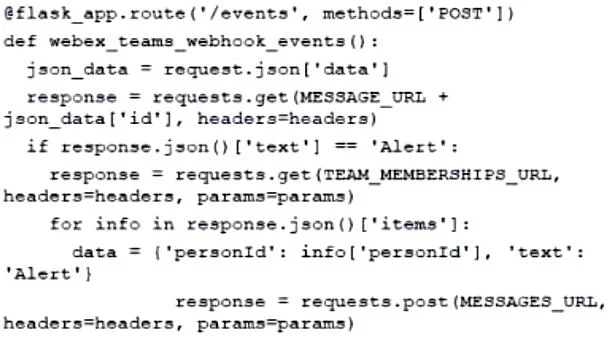
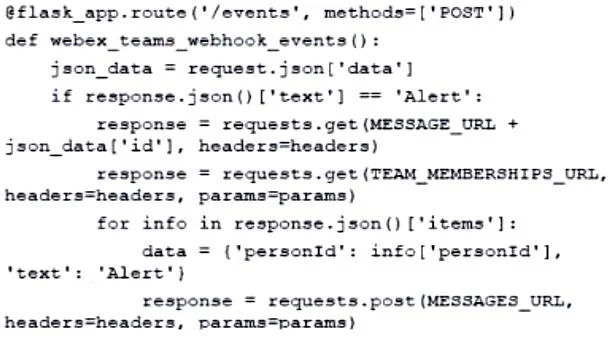
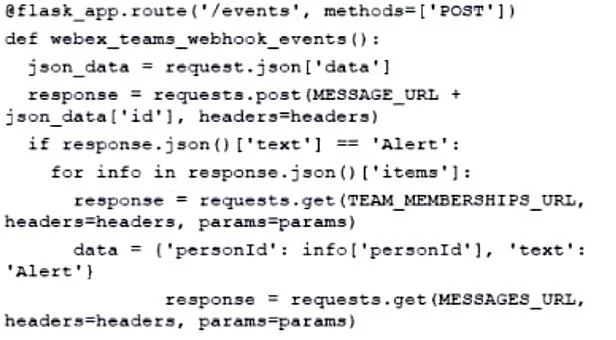
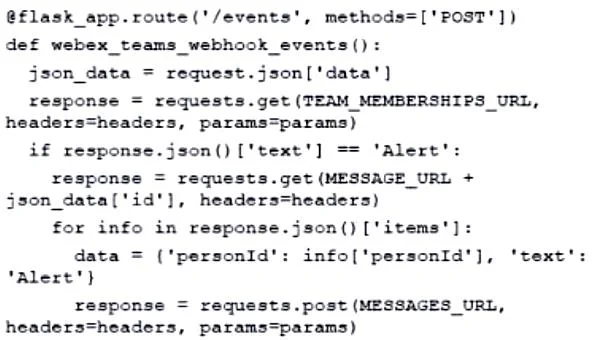
Refer to the exhibit. Which code snippet represents the sequence? A. B. C. D.
The correct answer is A. A directory called PRODUCTION is created. C. A YAML file is created. The code sequence performs two filesystem operations: creating a directory named PRODUCTION and creating a YAML file.
Question
Refer to the exhibit. Which code snippet represents the sequence? A. B. C. D.
Exhibits
Options
- AA directory called PRODUCTION is created.
- BThe engineer changes to the parent directory.
- CA YAML file is created.
- DA YAML file is removed.
- EA directory called state.yml is created.
How the community answered
(50 responses)- A82% (41)
- B6% (3)
- D2% (1)
- E10% (5)
Why each option
The code sequence performs two filesystem operations: creating a directory named PRODUCTION and creating a YAML file.
Creating a directory named PRODUCTION (via mkdir PRODUCTION or equivalent) is a standard shell filesystem operation that matches the first step shown in the code sequence.
Changing to the parent directory (cd ..) is a navigation operation not represented as any step in the code sequence shown in the exhibit.
Creating a YAML file (e.g., touch state.yml or redirecting content to a .yml path) matches the second step in the sequence and is consistent with infrastructure-as-code automation workflows.
Removing a YAML file is a deletion operation (rm), which is the opposite of creation and does not appear anywhere in the described sequence.
state.yml has a .yml extension indicating it is a file, not a directory; the sequence does not create a directory with that name.
Concept tested: Linux shell filesystem operations in automation scripts
Source: https://linux.die.net/man/1/mkdir
Topics
Community Discussion
No community discussion yet for this question.