
200-401 · Question #3
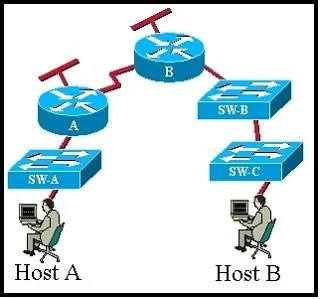
Refer to the exhibit. CCNA.com has the industrial network shown in the exhibit. All switches are configured as layer 2 switches and are using VLAN 1 as their management VLAN. Each VLAN 1 interface…
The correct answer is A. allows connectivity between the VLAN 1 interface on SW-C and other devices in the network. Assigning a default gateway to a Layer 2 switch only affects the switch's own management traffic - specifically, it enables the switch's VLAN 1 SVI (management interface) to communicate with devices on remote networks or subnets, such as when an admin SSHes into SW-C from a…
Question
Refer to the exhibit. CCNA.com has the industrial network shown in the exhibit. All switches are configured as layer 2 switches and are using VLAN 1 as their management VLAN. Each VLAN 1 interface has been assigned the correct IP address. What is the purpose of assigning a default gateway to SW-C switch?
Exhibit
Options
- Aallows connectivity between the VLAN 1 interface on SW-C and other devices in the network.
- Ballows connectivity between Host A and other devices in the network.
- Callows connectivity between Host B and other devices in the network.
- Dallows the switch to pass traffic between Host A and Host B
How the community answered
(40 responses)- A93% (37)
- B3% (1)
- D5% (2)
Explanation
Assigning a default gateway to a Layer 2 switch only affects the switch's own management traffic - specifically, it enables the switch's VLAN 1 SVI (management interface) to communicate with devices on remote networks or subnets, such as when an admin SSHes into SW-C from a different network segment. Option A is correct because without a default gateway, the switch can reach devices on its own local subnet but cannot send or receive management traffic beyond that subnet.
B and C are wrong because hosts derive their own routing behavior from their own individually configured default gateways - the switch's gateway setting has zero effect on how Host A or Host B reach remote destinations. D is wrong because Layer 2 switches forward traffic between hosts using MAC address tables, which requires no default gateway at all; the gateway only matters for traffic originating from the switch itself, not traffic transiting through it.
Memory tip: Think of the switch's default gateway as its own "personal exit door" - it only helps the switch get out of the local subnet for management purposes, and has nothing to do with how connected hosts or forwarded frames behave.
Topics
Community Discussion
No community discussion yet for this question.