
200-301 · Question #891
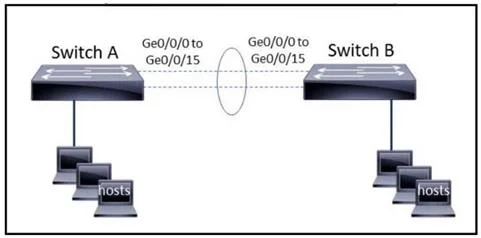
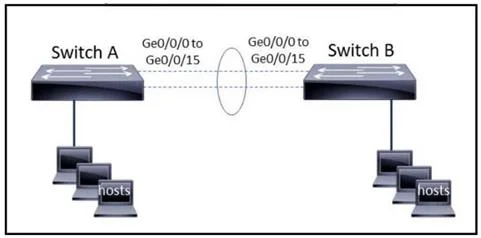
Refer to the exhibit. The EtherChannel is configured with a speed of 1000 and duplex as full on both ends of channel group 1. What is the next step to configure the channel on switch A to respond to…
The correct answer is D. interface port-channel 1 channel-group 1 mode passive. To configure an LACP EtherChannel to respond to but not initiate communication, the interfaces must be set to passive mode.
Question
Refer to the exhibit. The EtherChannel is configured with a speed of 1000 and duplex as full on both ends of channel group 1. What is the next step to configure the channel on switch A to respond to but not initiate LACP communication?
Exhibits
Options
- Ainterface range gigabitethernet0/0/0-15 channel-group 1 mode on
- Binterface range gigabitethernet0/0/0-15 channel-group 1 mode desirable
- Cinterface port-channel 1 channel-group 1 mode auto
- Dinterface port-channel 1 channel-group 1 mode passive
How the community answered
(25 responses)- A4% (1)
- B8% (2)
- C4% (1)
- D84% (21)
Why each option
To configure an LACP EtherChannel to respond to but not initiate communication, the interfaces must be set to `passive` mode.
`mode on` forces the EtherChannel to form without LACP negotiation, so it neither initiates nor responds to LACP.
`mode desirable` is a PAgP (Port Aggregation Protocol) mode, not an LACP mode, and it actively initiates PAgP negotiation.
`mode auto` is a PAgP (Port Aggregation Protocol) mode, not an LACP mode, and it responds to PAgP but does not initiate it.
The `passive` LACP mode configures an EtherChannel member interface to respond to LACP packets from a remote device but prevents it from initiating LACP negotiation itself, precisely matching the requirement.
Concept tested: LACP EtherChannel negotiation modes
Source: https://www.cisco.com/c/en/us/td/docs/switches/lan/catalyst3750/software/release/12-2_55_se/configuration/guide/scg/swethchl.html
Topics
Community Discussion
No community discussion yet for this question.